Get Full Government Meeting Transcripts, Videos, & Alerts Forever!
Get email alerts on the Agriculture And Water topic
No spam. Unsubscribe anytime.
Farmers Union warns merger could threaten water, local control; commission rules on intervenor exhibits
Summary
Montana Farmers Union called Walter Schwietzer to testify about risks to agriculture, water and enforceability of protections; the commission admitted some MFU exhibits, excluded others as hearsay or lacking foundation, and took administrative notice of an IRP docket.
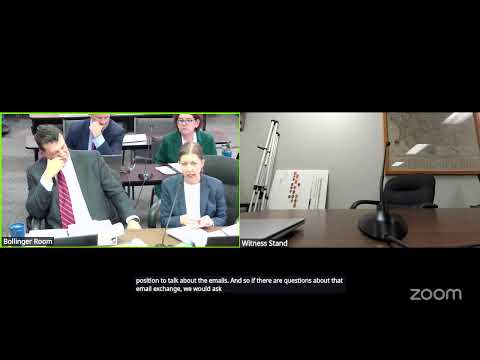
Walter Schwietzer, president of the Montana Farmers Union, testified on May 11 before the Public Service Commission, warning that the proposed Black Hills–Northwestern merger could reduce local control over assets and pose risks for Montana agriculture and water access. Commissioners questioned the limits of the Public Service Commission’s jurisdiction over water rights and pressed the witness on what enforceable protections would satisfy agricultural stakeholders.
Schweitzer told the commission he was deeply concerned about transfer of control and whether commitments made today would remain enforceable by regulators in the future. “The control of our water is one of them,” he said, and later added, “It’s scaring the hell out of me,” describing members’ fears about long‑term access to electricity and water essential for farming.
Counsel for the joint applicants objected to a broad set of exhibits proffered with Farmers Union testimony. The commission ruled on the record: it admitted certain items (for example, MFU‑03 and MFU‑06) but sustained objections to other proffered materials as hearsay or lacking foundation (notably MFU‑10, MFU‑11, MFU‑12, MFU‑13, MFU‑14, MFU‑15 and MFU‑16). The commission also took administrative notice of a complete Integrated Resource Plan docket (docket number referenced in the hearing as 20260426) and directed counsel may highlight pages of that record when questioning witnesses.
In his testimony, Schweitzer asked the commission to protect Montana customers by ensuring primary access for agricultural loads and preventing Montana ratepayers from shouldering costs for infrastructure that primarily serves large new loads. Commissioners expressed sympathy for agricultural concerns but warned the commission’s legal authority does not extend to water rights; some commissioners said the record should show any promised protections and the mechanisms by which they would be enforced.
The hearing recessed for the day at 5:17 p.m.; the commission scheduled further proceedings to resume at 8:30 a.m., starting with public comment and then limited additional evidentiary questioning (the commission made Crystal Veil and Kim Nooney available remotely and scheduled Ralph Smith of the Montana Consumer Council to appear).