Get Full Government Meeting Transcripts, Videos, & Alerts Forever!
Get email alerts on the School Health Services topic
No spam. Unsubscribe anytime.
District nursing director details screenings, medications and injury reports in annual health services briefing
Summary
Amanda, the district director of nursing, told the board the 2025–26 health services report showed 603 vision screenings (106 referrals), 235 hearing screens (4 referrals), 17,583 medications administered and a 99% immunization compliance rate; the report was informational and required no board action.
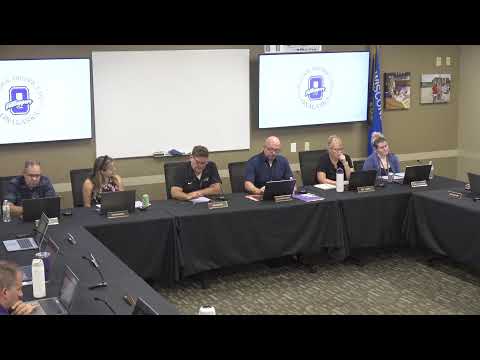
Amanda, the district director of nursing, presented the Onalaska School District's 2025''26 school health services annual report at the July 13 board meeting, outlining screenings, medication administration and injury tracking from the past year.
The report recorded 603 vision screenings with 106 referrals and 235 hearing screens with four referrals; Amanda said those referrals were largely resolved after families sought follow-up care. She told the board the district administered 17,583 doses of medication during the school year and tracked eight medication errors (two classified as late and six as "other"), each followed by a review and parent notification process.
"We screened a total of 603 students for vision this year and referred 106," Amanda said, and added that most referrals resulted in student visits to an eye doctor. She also reported the district met its immunization goal, reaching 99 percent compliance; 131 students had documented immunization waivers (medical, religious or personal) and were counted as compliant per district procedure.
Amanda reviewed delegation and training practices: the district delegated 38 student-specific procedures to about 240 staff members this year and trains staff annually on epinephrine auto-injector and bronchodilator use. For naloxone (nasal naloxone), she said the first year's training focused on staff most likely to be present and able to respond (custodial staff, administrators, office staff and health paraprofessionals). She noted that staff complete training during the week before students return.
The report also included injury data and concussion monitoring. Amanda said the district logged 2,421 total student injuries across buildings, including 736 head-injury reports; most incidents were minor (level 1) with only one level 3 event that required immediate attention. She reported four concussions that occurred during recess or PE this year.
Board members asked about training timing and how staff were chosen for naloxone training; Amanda explained the selection focused on those who are routinely present and able to respond, given training bandwidth in the first implementation year. She said medication errors generate an internal review and notification to families as part of the district's safety protocols.
The board received the report for information; no vote or formal action was required.