Get Full Government Meeting Transcripts, Videos, & Alerts Forever!
Get email alerts on the Recycling topic
No spam. Unsubscribe anytime.
Residents urge Polk County to keep recycling program as volunteers wind down operations
Summary
Polk County Recycling & Beautification told the commissioners it will wind down operations this fall; volunteers urged the court to take over operations, and PCRB asked the county to consider staffing options and a budget proposal to keep the center running.
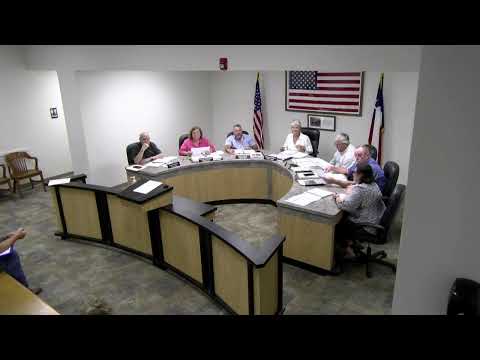
Polk County Recycling & Beautification (PCRB) notified the Polk County Commissioners Court that it can no longer sustain day-to-day operations and will wind down collections, prompting residents and PCRB leaders to urge county support so the recycling center does not close.
Carrie, a representative of Polk County Recycling & Beautification, told the court that since 2021 PCRB has diverted "over 400,000 pounds of material from the landfill," relied on more than 60 volunteers and roughly 8,000 volunteer hours, and brought in about $30,000 in material sales over five years against roughly $200,000 in operating costs. "The revenue from material sales does not come close to the cost of running a recycling program," she said, and added that several key volunteers are relocating, which prompted the boards decision to discontinue some collections (plastic collection already ended) and otherwise wind down by Sept. 29 unless the county directs a different path.
Longtime volunteers pressed the court directly. Susan Musney, introduced by the court as a volunteer for PCRB, said she and others have driven to recycle for years and asked commissioners to "please vote to have the county continue this program." Richard Burr recalled early community fundraising and said that forcing residents to drive farther would increase vehicle miles and carbon emissions.
Court members treated the PCRB notice as informational but asked for follow-up detail. The presiding official asked PCRB to provide a budget proposal outlining costs and staffing needs if the county were to assume operations; Carrie recommended at least one full-time employee to maintain current service levels and offered to prepare a detailed cost estimate. The court also asked that Commissioner Cassidy head a committee to review options and report back for inclusion in the budget process.
The immediate operational choices PCRB presented were: (1) full continuation with county staffing, (2) a reduced or periodic collection model, or (3) full discontinuation. The county owns the center building and major equipment purchased with grant funds, and staff noted the conversation centers on operational funding rather than capital outlays.
The court did not adopt a final policy at the meeting. Next steps: PCRB will deliver the requested budget proposal and the court-appointed commissioner will review options and bring a recommendation during the budget process.
Ending: The court accepted PCRBs notice, requested a formal budget proposal and named Commissioner Cassidy to lead the review; no immediate appropriation or formal transfer of operations was approved at the meeting.