Get Full Government Meeting Transcripts, Videos, & Alerts Forever!
Get email alerts on the Act Of Union 1839 topic
No spam. Unsubscribe anytime.
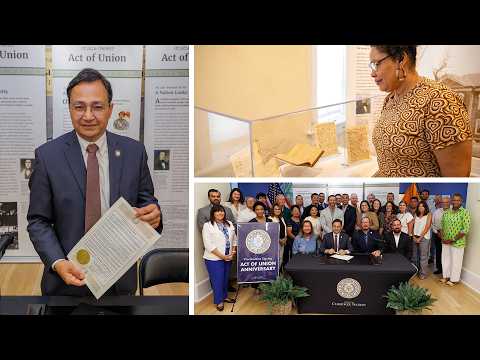
Presenters at Cherokee National History Museum mark 1839 Act of Union as a unifying moment
Summary
Presenters at the Cherokee National History Museum commemorated the July 12, 1839 Act of Union, saying it healed divisions among Cherokees after forced removal and legally affirmed the continuity of the Cherokee Nation as a single body politic.
Presenters at the Cherokee National History Museum gathered to commemorate the July 12, 1839 Act of Union, saying the measure helped reunite Cherokee factions after the forced removal and affirmed the Cherokee Nation’s continued existence.
Speaker 1, a presenter, said the Act of Union “was the instrument that really brought healing and unity to our people after our forced removal,” and described the Act’s effect as declaring “very clearly that the Cherokee Nation… would continue on as one body politic.”
Speaker 2, a presenter, said the museum ceremony underscores the role of history in civic knowledge: “Our history tells the story of who we are, and celebrating events like the act of union are incredibly important to let the general public know, Oklahomans know, and Cherokee citizens know just exactly the legal and historical basis for the Cherokee Nation today.”
Speaker 1 reviewed the 19th-century context, noting bitter division over removal and an earlier group of ‘‘old settlers’’ who had established a government before the removal. He said the Act of Union reflected a deliberate choice by leaders to repair divisions by focusing on shared language, culture and history.
Speaker 3, a presenter, connected the Act to constitutional development, calling it “an important and required step” toward formation of the Cherokee Nation constitution and saying the museum aims to protect and honor that legacy.
The event was a historical commemoration; the transcript records statements and reflections rather than formal motions or votes. No formal actions or decisions were recorded in the transcript. The presenters framed the Act of Union as a foundational moment for the modern Cherokee Nation and emphasized public awareness of that legal and historical continuity.
The museum event reiterated historical themes of reconciliation and constitutional continuity; organizers said the work of preserving and honoring that history continues.