Get Full Government Meeting Transcripts, Videos, & Alerts Forever!
Get email alerts on the School Policy Parental Rights topic
No spam. Unsubscribe anytime.
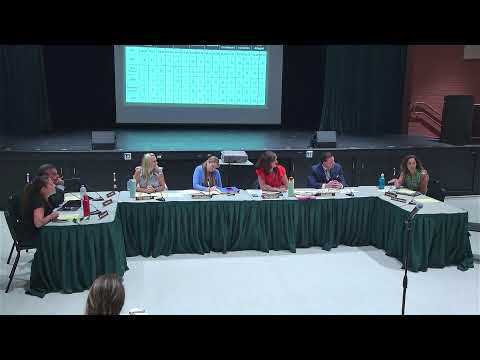
Kinnelon board hears sharply divided public on revised Policy 91‑25; no final vote tonight
Summary
At a packed July 14 meeting, dozens of residents urged and opposed the board’s revised Policy 91‑25 (a K–12 family-partnership/transparency document). Supporters said it organizes existing parental rights; opponents said it risks undermining student confidentiality and echoes national groups. The board did not take a final vote.
The Kinnelon Board of Education on July 14 heard an extended, often emotional public-comment period centered on a revised Policy 91‑25, billed by the district as a consolidated K–12 family-partnership, transparency and resource policy. Speakers on both sides urged the board to either adopt the document to provide clarity or to revise it further to protect student confidentiality and avoid importing national politics into local schools.
Supporters said the policy compiles existing rights and procedures so parents can more easily find them. "After carefully reading the policy in its entirety, I believe it represents a thoughtful and balanced commitment to transparency," said Richard DeBello, a parent who told the board he has three children in the district. "The policy repeatedly states that it must be implemented consistent with all applicable state and federal laws and does not supersede those protections."
Opponents focused on language that they say would make it harder for students to seek confidential help at school. "As a psychiatric nurse, I know the value of confidentiality and trust in the formation of a therapeutic relationship," said Meredith McNearney Chin, who urged the board to revise Article 2.2 on access to health and counseling records so students continue to trust counselors and nurses. Several speakers echoed that concern, saying mandatory parental notification in sensitive cases could discourage students from seeking help.
Other residents framed the debate as part of a broader national debate. "This policy advances the same mechanism" described by national activists and could be a vehicle for incremental changes to curriculum, said Adam Edelhauser, who warned that repeated individual opt-outs can become a de facto censorship of instruction. Cass Meehawke, a former student who said they left the district after being ostracized, said the policy risks making schools less safe for vulnerable youth: "If you mandate that you're allowed to tell them those things, you're making it dangerous for them to be at home potentially."
Board leaders and administration repeatedly said the revisions were an attempt to make district policy easier for parents to locate, not to create new restrictions. "Everything has been revised. You've had ample time to look at it," Superintendent Mango told the room earlier in the meeting, and later the board president said the document is intended to collect policies relevant to families rather than to expand district authority.
Speakers offered competing practical warnings. Daniel Schwartz cautioned that similar policies have invited litigation in other New Jersey districts and could produce litigation expenses and community disruption; others, including representatives from parent-advocacy groups, said the policy simply affirms parents' existing rights.
The board did not take a final vote on Policy 91‑25 at the July 14 meeting. President (Board President) closed the formal agenda public-comment block after the allotted 30 minutes, noted the board had received 27 emails in favor and 11 opposed, and then moved on to routine business. Members encouraged continued engagement and signaled willingness to review additional input via the citizen advisory committee and further committee work.
The next procedural step on the policy was not announced as a final vote date; the board said it will discuss the document further in committee and at future public meetings.
Ending
Board members asked the public to continue providing written feedback and to participate in upcoming advisory-committee meetings; the board emphasized it must comply with state law in implementation and that revisions will continue to be considered publicly.