Get Full Government Meeting Transcripts, Videos, & Alerts Forever!
Get email alerts on the Mineral Rights topic
No spam. Unsubscribe anytime.
Des Moines County supervisors are asked to OK USG purchase agreement for mineral rights under Big Hollow Recreation Area
Summary
Conservation staff presented a draft purchase agreement letting USG examine and potentially buy mineral rights under about 148 acres of Big Hollow Recreation Area; the proposal prompted questions about federal Land and Water Conservation Fund rules, whether sale proceeds can be directed back to conservation, and a request for more legal review before any vote.
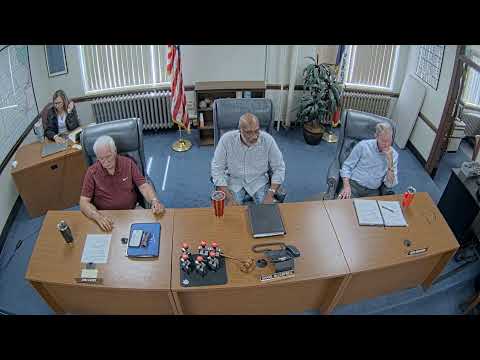
County conservation staff on the dais asked the Board of Supervisors to consider a draft purchase agreement with USG that would give the company up to a year to determine which portion of roughly 148 acres under Big Hollow Recreation Area it wishes to acquire mineral rights to and a long-term option to acquire up to 10 acres of surface land if needed for ventilation or a shaft. Chris Lee, a conservation department representative, described the document as "just a purchase agreement — it's not a sale yet" and said the agreement gives USG a year to execute if it chooses.
The conservation presentation noted USG already owns mineral rights under large portions of the park and that most of the acreage in the current draft lies under Big Hollow Lake. Lee said the draft includes a purchase-price figure and a process that would let USG perform soil borings and other testing to confirm quantities and quality. "They already own mineral rights under a large portion of the park already," Lee said, summarizing the background.
Lee also said he sought comment from the National Park Service, the federal administrator for the Land and Water Conservation Fund. According to Lee, the Park Service "doesn't have an issue with the contract" but cautioned that if USG exercises any right to buy surface land that would trigger a federal conversion review and require approvals and replacement land or mitigation.
Conservation board members and supervisors pressed several points. One supervisor stressed that while conservation staff may want proceeds directed into the conservation reserve fund, county supervisors control allocation of county revenue under state law and could redirect those funds: "That revenue ... belongs to the general basic fund," the supervisor said, noting a subsequent board could allocate money differently. Conservation board representatives said they would be less inclined to support real-estate transactions that did not return proceeds to conservation operations.
Supervisors asked practical questions about how USG conducts operations — for example, when blasting or three-shift work might occur — and whether such activity could disturb campers or park users. The county engineer and other staff noted the county will need to follow normal sale-of-real-estate procedures, including public notice, possible competitive solicitation or an approved sale process, and careful review for conflicts with any Land and Water Conservation Fund restrictions.
Multiple supervisors emphasized the county could negotiate contract language that limits or stages rights (for example, granting only soil-boring access initially) rather than granting an undefined future interest in unspecified acreage. One supervisor suggested narrowing the agreement to a limited, staged set of rights so the county retains discretionary control.
Next steps: staff said they will review the draft for legal and procedural issues, consult case law and guidance tied to conservation easements and federal LWCF restrictions, and return with recommended edits and a timetable for any public hearings or resolutions required before a final decision.