Get Full Government Meeting Transcripts, Videos, & Alerts Forever!
Get email alerts on the Surveillance topic
No spam. Unsubscribe anytime.
Council committee approves six‑month Flock Safety extension after lengthy privacy debate
Summary
After hours of testimony and dozens of amendments, Cleveland’s finance committee recommended a six‑month extension of the city’s Flock Safety license‑plate reader contract while the administration issues an RFP; members adopted new limits on data sharing and reporting requirements but deep distrust remained among some council members.
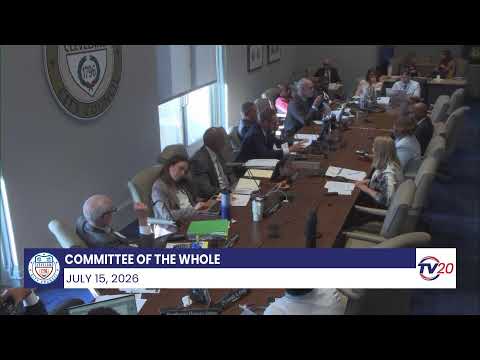
The Cleveland City Council finance committee on July 14 recommended advancing Ordinance 683‑2026, a six‑month extension of the city’s contract for Flock Safety automated license‑plate readers, after a marathon debate that stretched through most of the meeting.
The extension is intended to preserve access to the ALPR technology while the city issues a formal request for proposals to consider alternate providers. Director of Public Safety (staff counsel and the director’s presentation) and Chief Todd of the Cleveland Division of Police said the equipment remains a critical investigative tool. "We are just using the system locally here," Chief Todd told the committee, noting the department had cut off national lookups and tightened filters to restrict searches for immigration or reproductive‑health indicators.
Why it matters: Council members framed the vote as a balance between public safety and privacy. Supporters said ALPRs have produced leads in homicide and other serious cases and argued a pause could jeopardize ongoing investigations; opponents warned that private vendor policies and regional fusion‑center access create unacceptable risks for immigrant and civil‑liberties communities.
What was decided: The committee approved the extension with a package of amendments that tighten access and accountability. Those changes include written notice requirements to the clerk and committee chair for cooperative purchases, monthly or bimonthly audit reporting to council if requested, higher fines and contractual penalties for misuse, and a newly adopted clause to bar sharing ALPR data with the Northeast Ohio Regional Fusion Center. The committee also directed staff to pursue an RFP within the six‑month window and said December 29 will be the deadline for council to review any new contract or extensions.
Different views at the table: Councilman Casey pressed administration staff on the legal and operational details of filters, national lookups and fusion‑center access, saying repeated disclosures about third‑party access had eroded trust. Several colleagues, including Councilmembers Bishop Conwell and Brian King, described circumstances in their neighborhoods where ALPR data had produced actionable leads. Others, including Councilmembers Harsh and Shaw, expressed unease about corporate vendor control of surveillance data and the adequacy of proposed penalties.
Next steps: The ordinance will be forwarded to the full council for final consideration; the administration is to issue an RFP and return within six months with a recommendation or request for further extension. The amendments adopted in committee are written into the ordinance sent forward.