Get Full Government Meeting Transcripts, Videos, & Alerts Forever!
Get email alerts on the Pavement topic
No spam. Unsubscribe anytime.
Traverse City presents pavement asset-management plan and flags multi-million-dollar funding gap
Summary
Staff presented the city’s Pavement Asset Management Plan (PAMP), showing condition goals (50% good / 40% fair / 10% poor), preservation priorities and a roughly $44 million gap between current pavement condition and the commission’s targets if reconstruction needs continue to grow.
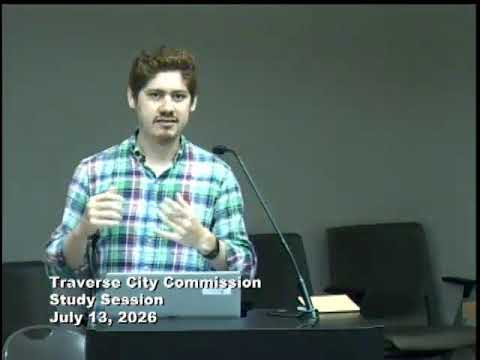
Chrissy Black, the city’s GIS analyst, presented Traverse City’s Pavement Asset Management Plan to the commission on July 13, laying out the inventory, current conditions, treatment priorities and estimated costs to meet the commission’s condition goals.
"Our pavement asset management plan is finally finished," Chrissy told the commission, describing inventory and condition assessment work and how PASER-based ratings and a preservation-first approach inform recommended treatments. She said the city accounts for 78.4 centerline miles under Act 51 reporting (major and local roads, not alleys) and uses condition goals of roughly 50% good, 40% fair and 10% poor for both major and local roads.
Chrissy and other staff emphasized prevention: more crack sealing, cape seals and targeted mill-and-fill work can extend service lives and reduce the need for expensive full reconstruction. She noted the city’s recent crack-seal program cost rose to about $137,000 this year versus prior seasons of $60,000–$65,000, and said reconstruction can cost on the order of $3 million–$4 million per lane mile. Chrissy cited example project cost breakouts (e.g., an 8th Street reconstruction where stormwater work accounted for roughly $207,000 of the project) and warned that stormwater upgrades are an additional cost not covered within pavement preservation funding.
Commissioners pressed on funding options. Staff said the city receives an estimated $1.2 million per year from the county under existing arrangements but that those dollars are restricted and cannot be used for sidewalks or utilities. The city manager and commissioners discussed potential strategies including lobbying for a statewide accommodation tax change to target destination communities, pursuing local millage options, and using special improvement districts to accelerate reconstruction on specific streets. One commissioner summarized the shortfall: "there's a $44,000,000 gap between our goals and where we are today," framing the need to align the PAMP with annual budget decisions.
Staff also outlined operational improvements that reduce costs: an in-house asphalt zipper and mill-and-fill capability to address small segments more cheaply, and a pilot with camera-based pavement-rating technology to improve monitoring and targeting of treatments.
Staff said the PAMP will be updated annually, will be used to prioritize projects to match available funding, and will be integrated into budget conversations so that preservation, reconstruction and stormwater implications are clearer for decision-makers.