Get Full Government Meeting Transcripts, Videos, & Alerts Forever!
Get email alerts on the Legislative Agenda topic
No spam. Unsubscribe anytime.
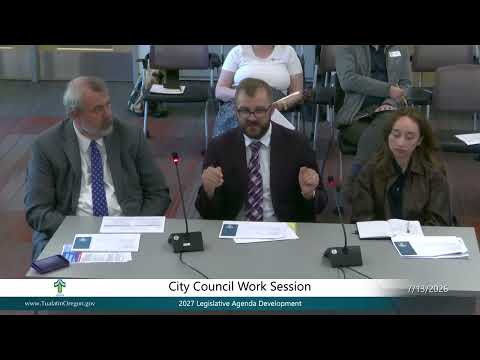
Tualatin council and lobbyists preview 2027 legislative agenda, flag need to protect local transportation revenue sharing
Summary
City staff and contracted lobbyists presented draft 2027 themes and urged council to protect local revenue-sharing amid likely transportation and Medicaid budget battles in Salem; council asked staff to refine priorities and return in August.
TUALATIN, Ore. — City staff and the city's contracted lobbying team on Tuesday outlined a draft 2027 legislative agenda and told the Tualatin City Council they should be prepared to defend local transportation revenue-sharing and monitor state Medicaid budget pressures.
—Deputy City Manager Megan George opened the discussion, saying the purpose of the meeting was to gather council input on themes, funding requests and draft timelines and to return in early August with a refined state agenda.
—Tyler Jameson, senior vice president with Warner and Partners, told the council Tualatin's 2026 themes still align with what is likely to dominate Salem's 2027 session. He identified three priorities: a transportation package, state budget choices driven by Medicaid costs and a set of economic-development recommendations from the governor's Prosperity Council.
—"Transportation funding continues to be the driver of all politics in Salem," Jameson said, adding that "it remains really critical that revenue sharing with local governments be maintained." He urged the city to "trust but verify" and be ready to mobilize if revenue-sharing appeared at risk.
—Jameson also flagged near-term budget pressure from HR1-related changes and Medicaid: "Implementation of HR1 ... is expected to cost the state something like $420,000,000. That doubles by the time we're in the next biennium in 2029," he said, noting that choices about benefits and coverage could squeeze other state spending.
—Dan of the Thorn Run team framed legislative agendas as both "blueprints and vision documents," saying work on sponsorship, stakeholder outreach and materials must start well before session. He and other consultants advised the council to define narrower priorities within broad themes so lobbyists can act opportunistically as bills emerge.
—Councilors pressed for specifics to protect local control and public involvement in land-use decisions, and asked staff to watch for proposed accountability or reporting requirements tied to transportation funds. Several members suggested technical, evidence-based briefings from staff would be the best way to push back against unfunded mandates.
—City staff said they would refine the list of priorities based on the discussion, have the Thorn Run team consult with state and federal contacts and return in August with a proposed state agenda for the council to consider and (if ready) adopt.
—What happens next: staff will return in early August with a draft state agenda informed by tonight's discussion and by Thorn Run's follow-up conversations with legislative offices. The council is scheduled to solidify its priorities before the 2027 session begins.