Get Full Government Meeting Transcripts, Videos, & Alerts Forever!
Get email alerts on the Fema Reform topic
No spam. Unsubscribe anytime.
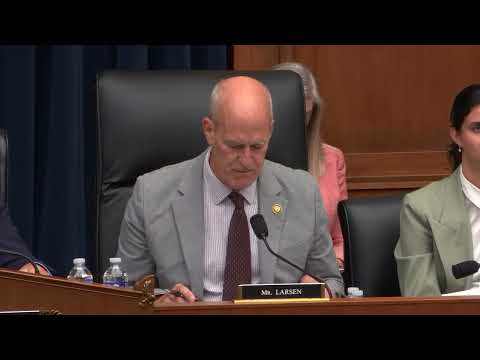
Lawmaker Rick urges overhaul of FEMA, outlines bipartisan FEMA Act to speed disaster aid
Summary
Lawmaker Rick told the House Committee on Transportation and Infrastructure that FEMA lacks the authority to deliver timely, comprehensive help and described a bipartisan FEMA Act that would create a universal application, provide up to $43,000 per household for repairs, speed reimbursements for governments and make BRIC a formula program.
Lawmaker Rick opened a House Committee on Transportation and Infrastructure hearing on FEMA reform by saying the agency’s effectiveness "is literally a life or death matter" for disaster survivors and urging Congress to enact the bipartisan FEMA Act to give FEMA new authority and speed aid.
Rick said FEMA has failed many survivors not for lack of effort but because it lacks the statutory authority to help people "in the best and most efficient way." Citing recent catastrophes "after the Maui wildfires or hurricanes Helene and Milton," he said the agency’s limits leave survivors navigating multiple programs and agencies rather than receiving coordinated help.
The lawmaker described drafting the FEMA Act with committee leaders, saying the bill was developed through consultations with more than 150 stakeholders and a public draft. He said the measure would create a universal application to reduce duplication, have the government match survivors to programs rather than forcing individuals to shop among FEMA, the Small Business Administration, the Agriculture Department and Housing and Urban Development, and expand what counts as eligible home repairs.
"Families would be eligible for help repairing all damage to their homes, not just the damage that makes it officially uninhabitable," Rick said, and added the proposal would allow homeowners to get money up front to raise or move their homes rather than paying out of pocket and awaiting reimbursement.
Rick gave local examples to underscore the consequences of delay: he said December 2025 floods in his district affected "over 100,000 Washingtonians," caused about $182,000,000 in damage to public infrastructure and damaged roughly 4,000 homes. He said the presidential major disaster declaration for those floods did not come until April 2026 and that survivors only began receiving FEMA aid after that declaration.
He also described multi-year delays for mitigation funds, saying emergency managers in Skagit County told him victims of 2021 floods "did not receive mitigation grant funds to buy out and elevate their homes until 2024," and that some homes flooded again while waiting for assistance.
On public infrastructure, Rick said the FEMA Act would require emergency work reimbursements to state and local governments within 120 days and provide upfront funding for permanent rebuilding projects — roads, bridges, schools and hospitals — unless officials can show evidence of fraud.
The bill would also change mitigation financing, he said, by making BRIC a steady formula program so states have predictable pre-disaster mitigation funds and can combine FEMA mitigation dollars with other federal grants for larger resilience projects.
Rick concluded that these changes would apply nationwide, not just to his state, and told the committee he looks forward to testimony from emergency managers and industry witnesses about how the reforms would work in practice. He yielded back the remainder of his time.