Get Full Government Meeting Transcripts, Videos, & Alerts Forever!
Get email alerts on the Development Application topic
No spam. Unsubscribe anytime.
Applicant outlines Huntsman's Lodge resort and microfoodery; commission agrees to research whether tourism district should allow compact manufacturing and golf‑
Summary
An applicant representative described plans to renovate a Highway 62 hotel into 'Huntsman's Lodge' — a resort with restaurant, microfoodery for packaged meals, possible hangars and a small golf amenity. Commissioners agreed to research whether limited-use tourism zoning could accommodate small-scale food manufacturing and to draft conditional-use language (including for executive golf courses) for a future public hearing.
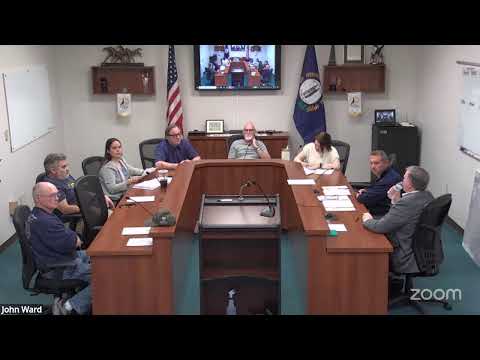
An attorney representing applicant Mickey Mitchell outlined plans April 30 to renovate a hotel on U.S. 62 into a resort called Huntsman's Lodge and to include small-scale food manufacturing to prepare packaged meals for distribution.
The presenter (speaking on Mitchell’s behalf) described a gut-renovation that would restore the hotel as a lodge and resort with a restaurant and outdoor activity areas. He said the project’s 'microfoodery' would be a small, viewable kitchen that prepares and packages fresh meals — a test model that could supply local distributions and potentially expand if the pilot succeeds. He characterized that component as a tourism-compatible, visitor-facing amenity similar to microbrewery/distillery models where visitors can view production.
The presenter also discussed adjacent-property concepts: hangars or aviation maintenance to use nearby airport access and the possibility of an executive or compact 9-hole golf course associated with the lodge. Staff and commissioners repeatedly cautioned that the limited-use (LU) tourism district had historically excluded warehousing and large-scale manufacturing. Staff recommended that any manufacturing/production be small, tourist-oriented, kept behind the building and screened from public view; that trucks be loaded out of sight; and that operators comply with food- and health-permitting requirements.
A participant who said he had retired from the local health branch described typical commercial food-permitting requirements (three-compartment sink, hand sink, mop sink) and chilled-storage parameters (hold at about 41°F); staff and the participant said those requirements are routine but must be met if product is sold or distributed. Commissioners directed staff to research executive-course precedents and to prepare draft ordinance language to add a conditional‑use allowance for compact golf courses if the commission decides to include them in the LU district.
No final land-use determination was made at the April 30 meeting; commissioners asked staff to draft text amendments and to follow statutory notice requirements for a future public hearing. Quote: "If he's as long as he sticks with this concept of kind of an almost a touristy thing... we could probably make it fit in the LU as long as it stays... small," a commissioner said during the exchange.
Next steps include staff research into executive golf-course models, drafting schedule-of-uses language if appropriate, and publishing required public notices so the commission can hold a hearing on any proposed changes.