Get Full Government Meeting Transcripts, Videos, & Alerts Forever!
Get email alerts on the Technology And Privacy topic
No spam. Unsubscribe anytime.
Council hears update on new ALPR system and residents press privacy, access and enforcement questions
Summary
Police told council that fixed and mobile automatic license-plate readers (ALPRs) have aided investigations and produced dozens of stops and summonses; residents and councilors asked about data access, out-of-state hits, accident detection, and who may view or request footage.
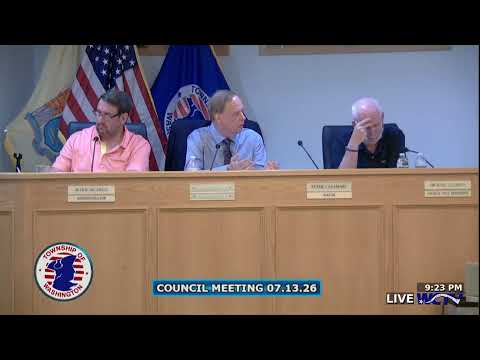
The Township of Washington police department updated council on the performance and use of newly installed automatic license-plate reader (ALPR) systems and answered questions from residents about privacy, access and enforcement.
Chief briefing: The chief said fixed ALPR cameras at two major intersections are operational and monitored from headquarters, and that a car-mounted ALPR has been in service since approximately April. A portable intersection unit is not yet live due to permitting and PSE&G power hookups; the chief said the vendor expects it to be activated before the end of the week. He described the system as “evolving” and cautioned that it generates false hits that officers must vet.
Results cited: The chief said ALPR alerts contributed to more than 40 motor-vehicle stops and roughly 60 summonses in recent months for issues such as unregistered vehicles, suspended licenses and outstanding warrants. He said the cameras have helped with hit-and-run and burglary investigations by supplying video that can be reviewed across jurisdictions.
Privacy, access and process: Residents pressed whether ALPRs detect red-light violations (they do not; New Jersey does not allow red-light camera enforcement), whether accident footage will be stored (intersection video will be available; other ALPR data is housed at the county prosecutor’s office), and whether the system can be used for continuous tracking of a resident without cause. The chief said data beyond intersection video is held by the county prosecutor; to access most other records the department would go through the prosecutor, and ALPR triggers require an associated lead (a warrant, stolen vehicle, or other alert) before proactive tracking. The chief said officers must confirm a plate and vehicle in person before enforcement action.
Technical limits and signage: Committee members and residents asked whether the AI can detect accidents automatically (the chief said not yet) and whether out-of-state or Canadian plates will register (they will, but are vetted more closely). There was discussion of signage to notify drivers the system is in use and of future options to mail notices for vehicle-registration issues; the chief said mailing notices would require continuous monitoring and additional protocols.
Next steps: Council directed staff to continue protocol development and requested additional detail about SOPs, data-retention and public access routes at a future meeting. No ordinance changes were adopted in this segment; the portable ALPR activation and related SOPs are pending further administrative follow-up.