Get Full Government Meeting Transcripts, Videos, & Alerts Forever!
Get email alerts on the Traffic Speed Enforcement topic
No spam. Unsubscribe anytime.
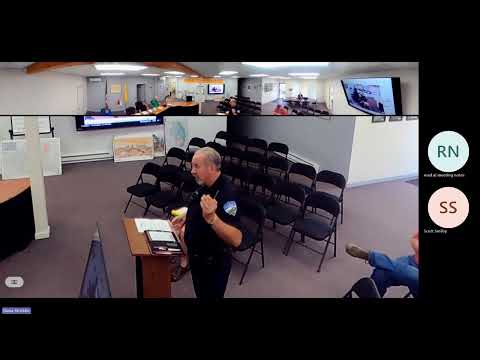
Police chief outlines speed‑monitoring options, costs and enforcement limits
Summary
Angel Fire’s police chief briefed the Roads & Infrastructure Committee on three types of speed-monitoring equipment—solar speed‑display signs, portable trailers and mobile speed vans—covering their capabilities, purchase and operating costs and limits for issuing enforceable citations under the Uniform Traffic Code.
The village police chief told the Angel Fire Roads & Infrastructure Committee on Wednesday that the most common tools for reducing speeding range from simple speed‑display signs to trailer‑mounted registries and full mobile enforcement vans, each with different costs and enforcement capabilities.
“The little ones… they only flash your speed,” the chief said, describing pole‑mounted solar signs that display drivers’ speeds but do not collect license‑plate data. He said those units typically start around $5,000. Trailer units with more portability and some data capture begin closer to $40,000, and full mobile vans that can be driven to problem locations can start around $100,000.
The chief explained why higher‑end systems are required when the goal is evidence for a citation. Under the Uniform Traffic Code, he said, citations that count as criminal or point‑bearing violations require certified radar or recorded evidence; cameras and plate‑capture systems can supply that evidence only when the hardware and state law permit it. He also said New Mexico’s single‑plate system reduces the effectiveness of some automated plate‑capture workflows compared with states that require front and rear plates.
Nut graf: The presentation gave the committee a menu of options—low‑cost signs that warn but do not produce prosecutable evidence, midrange trailers offering limited data, and expensive mobile units capable of enforcement—along with practical tradeoffs including vandalism risk and ongoing operating costs.
Committee members raised tactics to deter speeding short of purchasing expensive systems, including posting signs that say “Speed monitored by video” to create a perception of enforcement, rotating patrol presence near signs and integrating display units on existing signposts to avoid clutter. The chief cautioned that some systems require on‑site retrieval to download data, and that devices and plate cameras have been vandalized or stolen in the past.
Costs and insurance stood out as constraints. The chief said the village does not have funds in this year’s budget to buy speed‑monitoring hardware but supports low‑cost signage and coordinated patrols as interim measures. He also noted potential annual recertification and insurance costs for higher‑end devices, and recommended assessing whether funds would be better spent hiring additional patrol officers.
Members discussed placing a small number of display signs in known problem corridors and pursuing DOT coordination for the state highway corridors through the village. The chief said a recent DOT‑sponsored speed and safety study of the Highway 434 corridor showed most measured speeds at or near the posted limit, with a few locations a few miles an hour over—data the chief said he would review with the committee if requested.
Next steps: the committee did not adopt a procurement plan; members asked staff to return with more information on low‑cost signage, post options, and potential patrol coordination if the committee wants to pursue an incremental approach before seeking council approval for equipment purchases.