Get Full Government Meeting Transcripts, Videos, & Alerts Forever!
Get email alerts on the Parking topic
No spam. Unsubscribe anytime.
Study: Hotspotsnot a townwide shortage, drive Kensington parking pressures
Summary
A Walker Consultants presentation at a June 6 Kensington forum found the town has nearly 2,900 parking spaces but that high demand is concentrated in specific corridors and shopping centers; consultants recommended targeted management (signage, shared parking, enforcement) and the task force plans recommendations for the September council meeting.
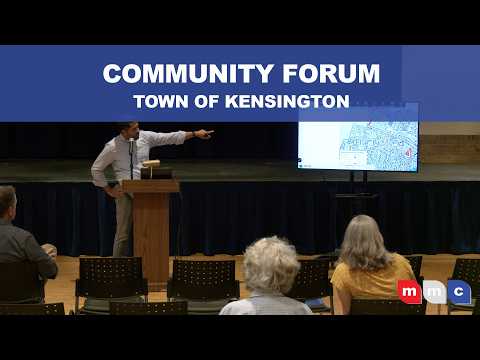
At a hybrid forum on June 6 at Kensington Town Hall, Walker Consultants presented an initial parking study showing the town has nearly 2,900 inventoried spaces but that parking strains are concentrated in a few corridors and shopping centers rather than reflecting a systemwide shortage.
"The issue of parking in Kensington is less about total supply, and it's more about highly concentrated demand in the most conveniently located areas," said Nigel Horath of Walker Consultants, summing up the study's central finding. The firm conducted inventory and occupancy counts (May 7 and May 12), license-plate observations for turnover (10 a.m. to 6 p.m.), and midday and evening samples to measure how the system is functioning.
Why it matters: the town's parking supply is uneven. Walker's inventory found roughly 33% of spaces are on-street, about 60% are privately owned off-street, and 8% are publicly available off-street (178 spaces across six public lots). Systemwide peak occupancy was about 45% during the highest-observed period; that overall figure masks multiple local segments where occupancy topped 85%, producing the perception motorists cannot find parking.
Key findings and data
- Inventory and sampling: the consultant team counted nearly 2,900 spaces across 95 on-street segments, 49 private lots and six public lots; occupancy counts were taken at midday and evening windows and turnover was measured using partial license-plate inventory.
- Systemwide vs. local patterns: systemwide peak occupancy reached roughly 45% (Wednesday midday), but commercial-core segments and certain shopping centers (including Howard Avenue, Kensington Parkway, Foster Street, Kensington Shopping Center, Kensington Crossing, and the Johnson Shopping Center area) showed repeated peaks above 85%.
- Turnover and length of stay: healthy commercial turnover rates were observed on some corridors (Armory ~2.5 cars/space/day; Howard ~2.4 weekdays, rising to ~4.3 on Saturdays). Montgomery Avenue showed much lower turnover (0.65 on the sampled weekday), indicating longer stays consistent with residential parking or employees.
- Underused assets: several private off-street lots and some public lots (including Lot 44, Town Hall) were heavily underutilized during evenings and weekends, a pattern the consultant said could be addressed by improved wayfinding or shared-parking agreements.
Strategies under consideration
Horath outlined a management-focused toolbox rather than an immediate recommendation to add supply: improved signage and wayfinding to highlight underused public lots, targeted enforcement in problem corridors, formal shared-parking agreements with private owners (including examples that may involve town payments for use at set times), and evaluation of paid parking as an option to be analyzed with pros and cons.
"More parking isn't always the answer," Horath said, describing the "parking triangle" tradeoff among cost, proximity and availability that guides policy choices.
Community concerns raised at the forum
Several residents and task force members pressed the consultant and council co-chair Anne Lichter on access and enforcement. A resident speaking for people with disabilities said walking 8'10 minutes to underused lots can be a barrier: "Are vying for the the 1 handicapped space we have on my block," the resident said, urging closer attention to ADA accessibility.
Nigel Horath responded that the report includes a review of ADA-accessible space distribution and that, across the town, 75 ADA-marked spaces were identified out of the 2,900 total (six on-street ADA spaces and 10 on publicly owned lots), with the majority located in private off-street lots. He said best-practice and compliance analysis will appear in the written report.
Task force member Joe Campbell and others called out residential hot spots where signage alone has not prevented vehicles from blocking narrow streets and limiting emergency access; Campbell pointed to Frederick Avenue, Kent Street and a stretch of Connecticut Avenue. The consultant acknowledged those areas were flagged and said enforcement pathways would be discussed in follow-up analysis.
On enforcement and paid parking: participants asked whether paid parking can function without enforcement. Horath answered plainly that paid parking must be paired with enforcement to be effective.
Next steps
Anne Lichter, co-chair of the parking task force, said the study will move into strategy and recommendation development with Walker Consultants and the task force. "We expect recommendations to be shared this fall, hopefully, in September," she said. Those recommendations will be considered by the town council and the community.
The consultant noted the report will include further detail on ADA distribution, enforcement windows and tools, shared-parking examples, and a fuller discussion of the impacts, costs and trade-offs of potential paid-parking programs. The town will hold additional task force and council discussions before any operational or budgetary changes are implemented.
Ending
Walker Consultants' presentation prioritized targeted management of local hotspots over adding general capacity; residents asked the town to ensure accessibility and enforceability are central to next steps. The task force and council will review full recommendations in the coming months, with a public discussion expected at the September town council meeting.