Get Full Government Meeting Transcripts, Videos, & Alerts Forever!
Get email alerts on the Land Use topic
No spam. Unsubscribe anytime.
Oradell council approves ordinance to create joint land-use board after public debate
Summary
After public opposition and extended debate, the Oradell Borough Council approved ordinance 26-10 on final reading to merge the planning and zoning boards into a joint land-use board; council members said the move aims to modernize land-use review and improve consistency, and staff will prepare a phased transition plan.
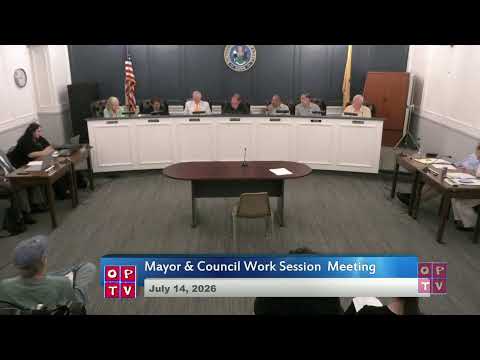
The Oradell Borough Council voted to adopt ordinance 26-10 on final reading on July 14, 2026, establishing a joint land-use board that will combine the borough’s planning and zoning functions.
Mayor Coates, who led the discussion, said the change is intended to bring the borough in line with practices used elsewhere in New Jersey and to improve consistency between master-plan goals and individual land-use decisions. “This puts the borough in a stronger position to be able to deal with future development,” Coates said during deliberations.
The ordinance drew sustained public comment before the vote. Residents criticized the proposal as a loss of local checks and public engagement, urged the council to recruit new board members instead of merging boards, and asked for more time for public review. Walt Letunes, introducing remarks from residents opposing the merger, said, “We don’t want an approval board. We want an independent zoning board,” and urged the council to preserve the existing checks and balances.
Council supporters responded that the measure had been reviewed at length: it was the product of more than a year and a half of committee work, line-by-line review by the ordinance committee and consultation with the planning and zoning boards. A council member who chaired the ordinance committee said the panel had “went line by line, clause by clause” and amended the draft multiple times to address concerns.
The council also added an appeals mechanism allowing parties to appeal certain joint-board decisions to the mayor and council, language supporters said was reinserted to preserve an avenue for review. The mayor said staff will prepare a transition plan that will allow applications already in process to be completed before the new board begins hearing new matters.
The council completed the required second-reading procedure and approved the ordinance by roll call. The mayor said the change must be implemented in accordance with applicable state law, including municipal land-use rules, and that the transition will take time to constitute the new board and to sunset the existing bodies.
What happens next: staff will memorialize an implementation and transition plan to be shared with the council, and new appointments will be required before the joint land-use board begins accepting new applications.