Get Full Government Meeting Transcripts, Videos, & Alerts Forever!
Get email alerts on the Transportation Ebikes topic
No spam. Unsubscribe anytime.
Richmond partners scramble after city budget ends bike‑share funding; nonprofit seeks ECIA dollars for Ebike Lending Library
Summary
City Council removed operating funds for the citywide electric bike‑share in the 2026–27 budget, ending the vendor service June 30. Local nonprofit Rich City Rides and project partners are seeking ECIA funding and community support to build a nonprofit Ebike Lending Library at Unity Park that would offer free long‑term checkouts, training and maintenance.
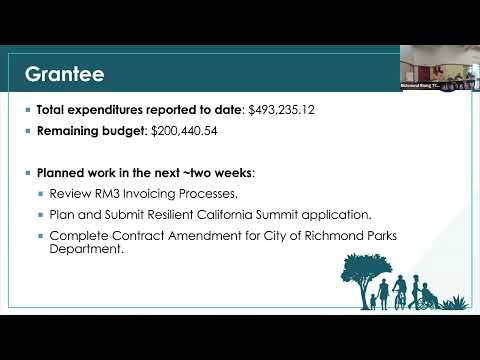
Beatriz Guerrero, who administers the Richmond Rising grant for the City of Richmond, told the committee that the City Council approved the 2026–27 budget without continuing funding for the citywide electric bike‑share program, and the vendor‑run service terminated June 30. Partners and project staff said they are exploring whether project‑area bikes can continue using Transformative Climate Communities (TCC) grant funds or other options.
Carlos Torres, outreach manager at Rich City Rides, outlined the nonprofit Ebike Lending Library proposal and asked the committee to support a July city council request for ECIA funding to complete construction at Unity Park. Torres said the library would be a staffed facility housing ebikes for free checkout—ranging from 30 minutes to multiple days—paired with bicycle safety education and volunteer maintenance training (VTM).
“We’re requesting the ECIA funding from Richmond City Council to complete construction funding,” Torres said, urging committee members to sign letters and attend the July 21 council meeting to show community support.
Torres and other partners emphasized how the lending library differs from for‑profit, app‑based bike‑share: the nonprofit model is staffed, does not require an app, and allows users to keep a bike overnight or longer. Torres described plans for training and repair services that would let people borrow bikes, learn maintenance, and, for volunteers who complete training, keep a bike while volunteering.
Partners also discussed setbacks: the program had an anticipated fleet of about 120 ebikes promised by another nonprofit, but that partner withdrew late last year. Torres said the team is seeking alternative fleet sources and hopes to ultimately site similar facilities across neighborhoods.
City and TCC staff cautioned that the city manager can change council meeting dates and that staff must coordinate with the Strategic Growth Council and service providers on allowable grant spending. Beatriz Guerrero said staff will meet with the Strategic Growth Council and the service provider to determine whether project‑area ebikes can be sustained through the grant or other funding sources; she described the situation as “very updated news” and said the CSC will receive follow‑up proposals.
The committee discussed operational details and outreach: partner volunteers will teach bike‑riding and repair skills at community events, and project leaders suggested social media and signature drives to show resident demand. Community members were invited to sign letters of support during the meeting and told how to contact council and city staff if they cannot attend the July hearing.
The next procedural step is staffing and funding decisions: project partners will return to the CSC with proposals after meetings with the service provider and city staff, and the community was asked to sign support letters and, if possible, attend the council hearing on July 21 to advocate for ECIA funding.
Ending: The committee agreed to follow up with staff and partners; no formal action or council funding decision was recorded at the meeting.