Get Full Government Meeting Transcripts, Videos, & Alerts Forever!
Get email alerts on the Amber Alert Expansion topic
No spam. Unsubscribe anytime.
Committee backs bill to let missing children be entered into Amber Alert system without confirmed abduction
Summary
Senate Bill 289 would allow missing children to be entered into the Amber Alert system even when proof of abduction is not yet established, a change sponsors say would close loopholes affecting foster or temporary‑custody children; the committee passed the bill unanimously after testimony from local law‑enforcement officials.
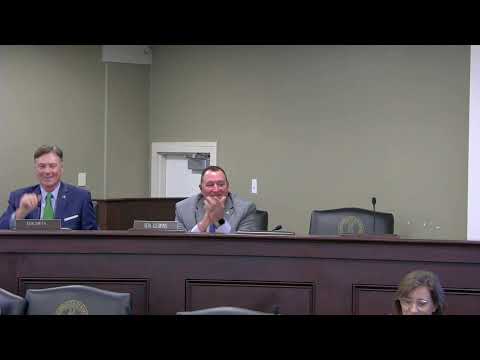
The Veterans, Military Affairs & Public Protection committee unanimously advanced Senate Bill 289 after sponsors and local law‑enforcement representatives said the measure closes a gap in current Amber Alert criteria.
"This will allow any missing child to go into the system and get an alert," said Jeremy Rao, the Rockcastle County attorney, summarizing the sponsor’s intent. Senator Brandon Storm said the bill is short but targeted to address specific loopholes encountered in a recent Rockcastle County case involving a 13‑year‑old.
Detective Sam Brock of the Rockcastle County Sheriff’s Office told the committee that, in the case described by the sponsor, authorities believed a child had been abducted but lacked the proof needed under current Amber Alert standards. He said earlier alerts could have helped locate the child sooner.
Senator Higdon asked about the risk of overuse and the criteria for issuing Amber Alerts; witnesses and the sponsor said the system remains refined and the bill clarifies that children in foster care or temporary custody (for example, under the Department for Juvenile Justice or Cabinet for Health and Family Services) are explicitly reportable under the statute.
The committee voted to pass SB 289 unanimously with a favorable expression. The sponsor asked that the measure not be placed on blanket consent so he may address the bill on the Senate floor.
Next steps: the bill proceeds to floor consideration with committee support.