Get Full Government Meeting Transcripts, Videos, & Alerts Forever!
Get email alerts on the Banking Regulation Balance Sheet topic
No spam. Unsubscribe anytime.
Senators press Fed chair on Basel III, balance sheet size and data‑center inflation risks
Summary
Lawmakers pressed Kevin Warsh on Basel III capital rules, the size of the Fed’s balance sheet and whether data‑center investment and AI activity are driving measured price increases; Warsh urged calibrated capital rules, called for tailored regulation, and said balance‑sheet policy will be reviewed by a task force.
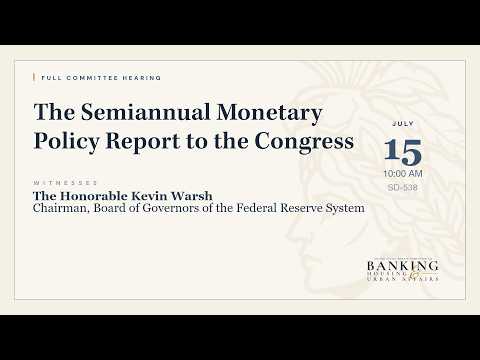
Senators on the Senate Banking Committee used Tuesday’s semiannual monetary policy hearing to press Federal Reserve Chair Kevin Warsh for specifics on bank capital rules, the Fed’s balance sheet and whether recent data‑center investment tied to AI is contributing to inflation.
Senator Ricketts and others cited the Fed’s balance sheet levels — discussed in the hearing as roughly $6.5–6.7 trillion — and asked whether that should be reduced. Warsh said his ‘‘predilection’’ is that interest‑rate policy should drive monetary policy and that the balance sheet should be “as small as practicable to conduct operations,” while accepting that the balance sheet should expand in crises or to provide liquidity.
On Basel III and the so‑called endgame of the international process, Warsh said he supports calibrated U.S. implementation that preserves resilience without unnecessarily restricting lending. He told senators the Fed will consider public comments before issuing a final rule and that he favors coordination among U.S. bank regulators to limit regulatory arbitrage.
Several lawmakers raised concerns that heavy investment in data centers and AI could be contributing to price pressures. Warsh acknowledged a rapid surge in capital expenditures tied to AI and said the Fed sees effects on demand and, in time, on supply; he characterized the debate about whether AI investment is inflationary as “one of the good family fights” among Fed officials and said task forces will study the issue.
On oversight of supervision, Warsh committed the Fed to cooperate with independent reviews and law enforcement where relevant, including inquiries into the supervision of Silicon Valley Bank and Signature Bank. He said he has “no reason to believe there are any criminal activity” but that investigators should be given access to records and that the Fed should help get to the bottom of supervisory failures.
Next steps: Warsh indicated the balance‑sheet task force will present analysis in the months ahead and that final regulatory decisions will follow public comment and internal deliberation.
No formal votes or binding policy actions were taken during the hearing; senators asked for follow‑up materials and the Fed has 45 days to respond to questions for the record.