Get Full Government Meeting Transcripts, Videos, & Alerts Forever!
Get email alerts on the Fed Ethics Ai Reform topic
No spam. Unsubscribe anytime.
Senate Banking panel presses Fed Chair Kevin Warsh on asset sales, ethics and AI task forces
Summary
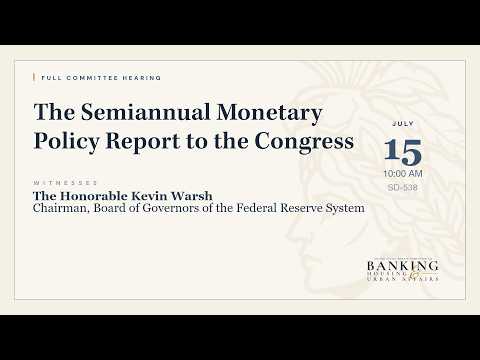
At his first semiannual hearing, Federal Reserve Chair Kevin Warsh defended pre‑office asset sales and described five task forces on communications, the balance sheet, data, productivity and inflation policy as senators pressed him on ethics, AI and bank regulation.
Federal Reserve Chair Kevin Warsh defended his early actions and outlined a program of reforms on Tuesday as the Senate Banking Committee pressed him on a range of issues from pre‑office asset sales to the economic risks and benefits of artificial intelligence.
The committee’s ranking member (identified in the transcript as Senator Warren) accused Warsh of refusing to disclose the details behind more than $100 million in asset sales shortly before he took office and asked point‑blank, “Who gave you a $100,000,000 right before you were sworn in?” Warsh replied that he had “fully honored the obligations I had under the ... Office of Government Ethics,” said he had largely converted assets into cash and Treasury bills, and that he would comply with continuing disclosure requirements.
Warren also asked whether Vice Chair Michelle Bowman spoke at a private Bank of America dinner during a Fed blackout period. Warsh said he was not at the meeting, that the inspector general is conducting fact‑finding and that he would not prejudge that independent inquiry.
Beyond the ethics exchanges, Warsh used his opening remarks and answers to lawmakers to lay out a set of five short‑term task forces the Fed will use to re‑examine policy and practice. "We are the Federal Reserve," he told the committee, and listed groups looking at communications, balance‑sheet policy, external data, productivity and jobs, and the Fed’s inflation framework.
On artificial intelligence, Warsh said the technology is “a consequential change to the U.S. and global economy” and that he expects a large surge in capital expenditures tied to AI. He told senators the Fed will study near‑term disruptions and long‑term productivity gains, saying the supply response could make many AI‑related price spikes temporary but could also raise measured prices in the next 12 months.
Warsh defended the Fed’s independence and said he meets regularly with the Treasury secretary but will not disclose private conversations with the president. “They chose an independent guy to do an independent job, and that’s exactly what I plan on doing,” he said.
Several senators pressed Warsh on the Fed’s balance sheet and upcoming international Basel capital rules. Warsh said interest‑rate policy should remain the primary monetary tool and that the balance sheet should be kept “as small as practicable” while preserving the ability to act in crises. He described the Basel engagement as an international process in which the United States should seek calibrated rules that maintain resilience without unnecessarily constraining lending.
What happens next: Warsh said the task forces are on a six‑month schedule, with early indications possibly as soon as September and formal conclusions hoped for by year end. Senators may submit additional questions for the record; the committee requested written questions by July 22 and gave the Fed 45 days to respond.
The hearing combined oversight questions about ethics and governance with policy discussion about AI, the balance sheet and bank supervision, leaving open several follow‑ups and an inspector‑general review of the reported blackout‑period dinner.