Get Full Government Meeting Transcripts, Videos, & Alerts Forever!
Get email alerts on the Board Ethics And Communications topic
No spam. Unsubscribe anytime.
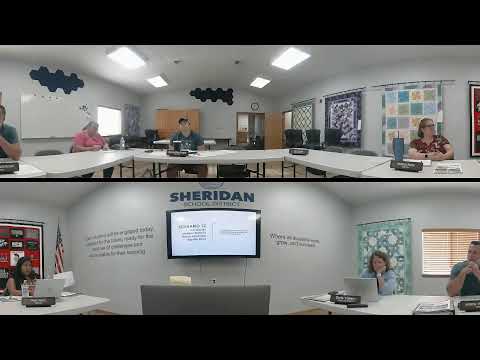
Presenter leads Sheridan SD 48J training on board communications, social media and ethics
Summary
At a special meeting, Sheridan SD 48J board members attended a training covering public-meeting rules, social media guidance, conflict-of-interest disclosure, executive-session confidentiality and proper channels for constituent complaints.
The Sheridan SD 48J board held a special meeting where a presenter led a training for board members on communications, social media use and ethics, emphasizing that individual student or personnel issues must be referred to the superintendent and that text messages about district business may be public records.
The presenter (Speaker S1) opened the session by reviewing best practices for school board communication, saying members should avoid using text threads to discuss agenda items because such exchanges can create a 'serial communication' that may violate the Oregon Public Meetings Law. S1 advised using email for district business outside public meetings and routing complaints through the superintendent or the district's appeals process instead of contacting teachers or principals directly.
Why it matters: Board members and small-district officials who exchange information informally risk creating the appearance that decisions are being made outside a noticed meeting. The presenter warned that relaying a discussion across multiple members or connecting others into a thread can effectively create a meeting without public notice.
During the training, S1 described appropriate public-facing board comments — reporting community events, recognizing achievements and sharing factual updates — while telling members to avoid debating policy on social media or revealing confidential information. When asked about dealing with negative online comments, a board member (Speaker S2) said they typically do not engage and will instead direct people to meetings or official district communications.
The presenter reviewed several hypothetical scenarios. In one, if a parent asks a board member to change a student's grade, S1 said the correct response is to listen respectfully and refer the parent to the district's complaint or appeals process and to the superintendent rather than contacting school staff. In another scenario, S1 said board members should not confirm or deny matters discussed in executive session and should treat such discussions as confidential unless the board officially releases information.
S1 also reminded members that operational direction should flow from the superintendent: individual members should not give orders to district staff. On conflicts of interest, S1 advised members to disclose potential conflicts under Oregon ethics law and to consult district counsel or the Oregon Government Ethics Commission about whether recusal is required.
The training closed with guidance on gifts: members should decline vendor gifts tied to contract opportunities, follow district policy for shared or donated items, and avoid accepting items that create even the appearance of favoritism. S1 said proper handling of gifts and conflicts preserves public trust and minimizes legal risk.
The meeting proceeded without a recorded vote on the training items; the presenter concluded the scenarios and the session moved on to other agenda business.