Get Full Government Meeting Transcripts, Videos, & Alerts Forever!
Get email alerts on the Data Center Ordinance topic
No spam. Unsubscribe anytime.
Clinton Plan Commission tables proposed data‑center zoning ordinance after hours of public comment
Summary
City staff presented a staff‑draft 'framework' ordinance for data centers; residents raised water, noise, setback, monitoring and decommissioning concerns and urged stronger mandatory protections. The commission voted to continue the public hearing to a later meeting for more study and recommended amendments.
City staff presented a staff‑draft ordinance to regulate data centers in Clinton, Iowa, drawing hours of public comment on July 10 and prompting the Plan Commission to vote to continue the public hearing to its next meeting.
City attorney Patrick O'Connell told commissioners the 16‑page draft is intended as a framework for the commission's recommendations. He said the ordinance requires a data‑center development plan, detailed water and electrical studies, a road‑use agreement, FAA compliance for airport‑adjacent sites and a decommissioning requirement that the developer fund site restoration. "This framework gives us a good working framework within which to start," O'Connell said, adding the staff's position is to recommend approval of the ordinance to the council with any amendments the commission believes are necessary.
The draft also calls for numeric noise limits, setback distances that increase nearer residential areas, and a requirement that applicants disclose electrical demand and infrastructure plans. O'Connell recommended the water study explicitly address private wells — "Here's where the private wells are located. Here's where the drawdown is gonna be when we build the facility," he said — and urged the commission to require engineers to report on potential impacts and remediation measures.
Opposition from residents and organized groups focused on several recurring themes. Attorney Mike Malloy, representing about 30 property‑owner residents, urged the commission to table the matter so the draft could be rewritten to address problems he said persist in the text: "We think that there needs to be more study involved in these ordinance language," Malloy said. Multiple speakers later urged removing permissive phrasing and replacing "may" with mandatory "shall" language, requested independent pre‑ and post‑construction hydrology and air monitoring, tighter setbacks (many asked for 1,500–2,000 feet for hyperscale projects rather than the draft's 1,000 feet), and explicit prohibitions on diesel backup generators.
Environmental and public‑interest groups flagged water and energy impacts. Jennifer Bridal of Food and Water Watch said her organization has model ordinance language and may seek a statewide moratorium; she told the commission that water‑quality, PFAS and energy‑use consequences should be considered at the municipal level as well as statewide. Labor and construction representatives urged careful drafting that would preserve local construction jobs while applying consistent rules across industries.
Several residents asked for clearer assurance that the city — not taxpayers — would not be left to pay for infrastructure upgrades or cleanup costs. O'Connell said development agreements typically address economic terms but stressed the ordinance should include measures to prevent shifting utility or infrastructure costs onto residents. He also proposed adding a prohibition section that would bar specific harmful features and a set of minimum standards for all applicants.
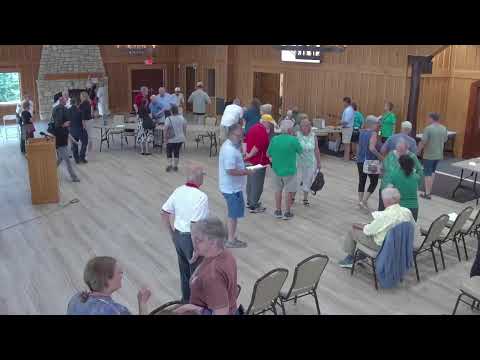
After closing public comment, commissioners debated whether to act on a recommendation that night or give members more time to digest the voluminous input. Commission counsel Jim Bruhn reminded the panel that the planning commission's role is advisory; final passage would rest with the city council. Following discussion, a commissioner moved — and the commission seconded — to continue the public hearing to the next regular meeting to allow staff to revise the draft and for members to review public submissions. The motion passed on a roll‑call vote with the commissioners present voting in favor.
The commission did not make a recommendation to forward the ordinance to the council at this meeting; commissioners asked staff to incorporate community suggestions, draft a prohibition list for particularly harmful systems and consider converting permissive phrasing into mandatory requirements where appropriate. The hearing will resume at the commission's next meeting, where commissioners say they will consider written recommendations, independent studies and any additional technical input.