Get Full Government Meeting Transcripts, Videos, & Alerts Forever!
Get email alerts on the Land Use topic
No spam. Unsubscribe anytime.
Concord committee moves to shape MCI redevelopment as state, town set timeline
Summary
Members of the Town of Concord Economic Vitality Committee agreed to organize formal input on the MCI master plan, urging the Select Board and planning process to prioritize commercial uses and a public-education timeline after a recent round of robust public comment and a $200,000 state planning bond tied to the project.
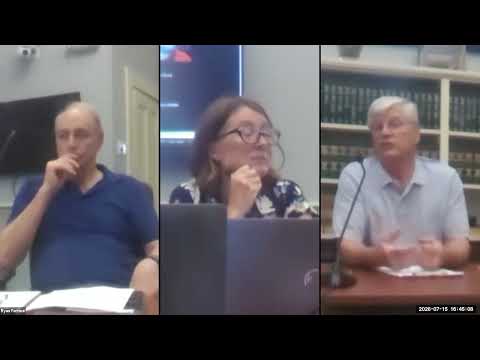
Greg Higgins, chair of the Town of Concord Economic Vitality Committee, opened the meeting and urged members to help shape the town’s response to the MCI master-plan process.
Sam, a committee member involved in the master-plan outreach, said the first round of public comment drew strong engagement and that the initial vision proposals included “around 800 to 1,000” housing units, a figure some in the room described as a negotiating position rather than a final target. "By all accounts, [the] public meeting was very well attended, robust conversation," Sam said.
The committee discussed timing and strategy for formal input. Cameron Barker, who participates in the collaborative group working with the Select Board and the planning board, urged members to “work sort of backwards from there,” noting zoning articles would likely need to be on a warrant early in the year to reach town meeting. Members repeatedly warned the group against rushing public outreach: Higgins cautioned that zoning changes of this size may require substantial voter education to secure the supermajority votes such actions can demand.
One member reported that the state recently authorized a $200,000 planning bond intended to support MCI and related route work; the member said the governor or a future governor has up to five years to release the funds. Committee members said that possibility strengthens the case for coordinated, early advocacy to tie any released funds to a locally coherent strategy that balances housing, commercial development and public services.
Land-use working-group members attending the meeting outlined priorities that would affect how MCI is packaged: upgrades to public-safety facilities (including the West Concord fire station and police headquarters), potential DPW relocation questions, and a proposal to form a long-range capital planning committee. Mark, a land-use working-group participant, said these pieces are interlinked and stressed the challenge of aligning capital needs with potential redevelopment. "How that huge development's gonna be packaged in with a new DPW, a new fire, and a new police is really the $64,000,000 question," Mark said.
The committee agreed to prepare a structured agenda and consolidated points to present to the multi-board working group and recommended inviting key officials, including Jeff Adams (recently named to lead the fall-on committee), to the September meeting so the committee can press for consideration of commercial uses and mitigation of service impacts. Members volunteered to serve as liaisons to the planning board, finance committee and cultural committees so the Economic Vitality Committee can monitor and feed input into the process.
The committee set its next meeting for Sept. 16 at 4:30 p.m. and planned to use that session to refine a draft position and outreach plan.