Get Full Government Meeting Transcripts, Videos, & Alerts Forever!
Get email alerts on the Zoning topic
No spam. Unsubscribe anytime.
Charlotte All Stars seeks lower parking ratio as Matthews wrestles with new state rule
Summary
At a July 13 public hearing, Charlotte All Stars asked Matthews officials to approve a text amendment lowering parking requirements for a new gymnastics facility; staff warned that a new state law eliminating parking minimums takes effect Jan. 1, 2027, and the Board closed the hearing without a final vote.
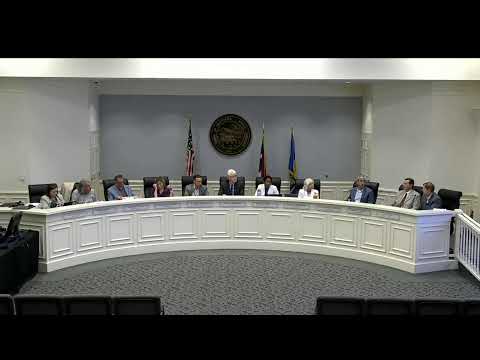
The Matthews Board of Commissioners held a public hearing July 13 on a zoning text amendment sought by Charlotte All Stars to add gymnastics/cheerleading as a defined use and to reduce parking minimums for that use.
Senior planner Nadine Bennett explained the application and said the town recently learned a state bill will eliminate local parking minimums statewide, effective Jan. 1, 2027. Bennett recommended the Board proceed with the public hearing but noted the applicant and staff are in a transitional position given the change in state law.
Attorney Britney Linz, representing Charlotte All Stars, told the Board the business has operated in Matthews for more than three decades and needs permits to begin construction on a newly purchased site on Independence Commerce Drive. Linz said the business proposed a parking ratio tailored to the facility’s function and that the existing category overstates the number of spaces needed.
Owner Kevin Brubaker said the old rule would have required about 250 spaces; he said Charlotte All Stars has historically used far fewer and plans roughly 125 spaces at the new site. “So regardless of this state bill… they still do have market conditions, and he still wants to make sure that the parents and the kids that visit the gymnastics facility will have sufficient parking,” Linz said.
Commissioners asked procedural and substantive questions, including whether handicap‑accessible parking remains protected and whether the Board could take an immediate vote; the town attorney said procedural rules required closing the hearing and following the planning process. The planning board had previously reviewed the proposal and unanimously recommended approval of the text change.
The Board closed the public hearing and reconvened the regular meeting without taking a final vote that night; staff indicated they may formally review the application administratively while continuing to consider the implications of the new state law.
What happens next: staff will continue to work with the applicant and planning staff; any formal action will follow applicable procedural timelines and the Board’s review of draft language that aligns with the new state requirements.