Get Full Government Meeting Transcripts, Videos, & Alerts Forever!
Get email alerts on the Zoning Dock Amendment topic
No spam. Unsubscribe anytime.
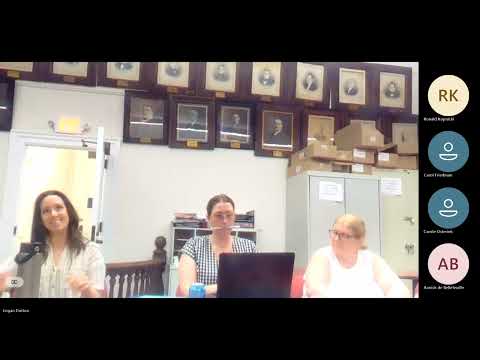
Hudson City planning board authorizes advisory letter on council’s proposed dock‑use code amendment
Summary
The planning board reviewed a council proposal to clarify City Code language about nonconforming commercial dock operations and agreed to authorize the chair to draft an advisory letter urging clearer, measurable standards; the board recorded a 5–0 roll‑call to authorize the draft letter.
The Hudson City Planning Board on Tuesday discussed a proposed zoning‑code amendment from the common council that would clarify how the city measures and administers nonconforming commercial dock operations if a court remands a contested conditional use permit.
The board’s chair framed the issue as narrowly procedural: "Does the proposed amendment provide clear, objective, and administratable standards that future planning boards can apply fairly, consistently, and predictably," the chair said, urging members not to re‑litigate past facts. The council asked the planning board for an advisory opinion on City Code 3‑25‑40a.
Ken, the presenter invited by the chair, told the board the draft is largely contingency language tied to active litigation over a dock conditional use permit. "If the court sends it back, you're going to have to deal with it on your own or with this additional code revision," Ken said, explaining the proposal is intended to translate existing code language into measurable metrics rather than to impose new prohibitions.
The board’s discussion focused on whether the amendment should prescribe objective, quantitative tests (for example, truck‑trip counts or annual tonnage) or instead leave more room for discretionary, evidence‑based findings. Members noted public submissions that estimate historical truck traffic at roughly 5,000 trips per year; the draft ordinance cited an upper reference point of about 10,000 round trips as a tolerable ceiling in certain circumstances, a figure several members described as an estimate rather than a mandate.
Veronica, a board member, questioned whether the planning board could separate process from substance given the amendment’s origins in litigation, saying she did not "see how you could put our blinders on" and ignore the broader context. Other members said the planning board’s role is to advise on administrability and clarity—what evidence future boards would need and how measurements should be defined.
After discussion the chair proposed drafting an advisory letter that would record the board’s technical concerns and recommendations rather than taking a formal "approve/disapprove" vote on the local law. The board voted on a motion to authorize the chair to draft and circulate a responsive advisory opinion to the common council; the motion was seconded and passed on a roll‑call recorded as five affirmative votes (Black, Jet Ski, Woodhall, Beard and Michael).
Next steps: the chair will prepare the draft advisory letter, circulate it to board members for edits before the next meeting and, if approved, transmit it to the common council. A public hearing on an unrelated item (the Edwards Elementary School project) was scheduled for later that evening at 6:15 p.m.
Authorities and code references discussed at the meeting included City Code provisions cited in the draft amendment (references in the discussion to City Code 3‑25‑40a, section 3‑25‑29 and section 3‑25‑17(d)).