Get Full Government Meeting Transcripts, Videos, & Alerts Forever!
Get email alerts on the Transportation Electrification topic
No spam. Unsubscribe anytime.
Committee backs 10-year transportation-electrification agreements that use clean-fuel credits to fund chargers
Summary
The committee recommended passage of Council Bill 121249 to let Seattle City Light enter up to 10-year transportation-electrification agreements in which customers assign Clean Fuel Standard credits to the utility so revenue can fund charging infrastructure and grid upgrades.
The Parks and City Light Committee voted 5-0 on July 15 to recommend Council Bill 121249, an ordinance authorizing Seattle City Light to enter up to 10-year transportation-electrification agreements with eligible customers participating in incentive programs.
City Light interim GM Rob Santoff and Angela Song, transportation electrification portfolio manager, told the committee the 10-year term supports phased, future-proofed construction of charging infrastructure, allows City Light to collect utilization and performance data (kilowatt-hours dispensed), and secures assignment of Washington Clean Fuel Standard credits to the utility. Those credits produce revenue to offset incentives and support additional electrification projects without relying solely on ratepayers.
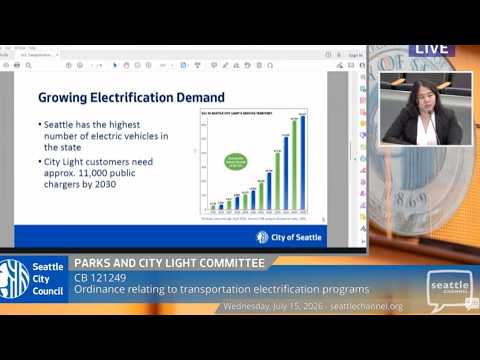
Song said Seattle has seen rapid EV adoption, with a compound annual growth rate of roughly 37% between 2015 and 2025, and staff estimated the service territory will require approximately 11,000 publicly accessible chargers by 2030 (City Light currently operates about 83 City Light-owned chargers and has supported installation of ~1,000 customer-owned chargers). City Light reported it sold its first Clean Fuel Standard credits in June through a broker (named in the presentation as Mercuria) and will continue to monetize credits to fund programs.
Council members asked about definitions of "public chargers," partnerships with King County Metro and Washington State Ferries (MOUs exist), and local project delays. Councilmember Osaka flagged a long-delayed Morgan Junction charging station in her district and requested a targeted briefing on rollout progress and levied investments. The committee recommended the ordinance for full-council consideration on July 21.