Get Full Government Meeting Transcripts, Videos, & Alerts Forever!
Get email alerts on the 2 Church Street topic
No spam. Unsubscribe anytime.
Community development committee advances 2 Church Street innovation-cluster agreement to full Board
Summary
The New Haven Community Development Committee voted to advance a proposed development and public-improvement package for 2 Church Street — part of a broader innovation cluster tied to Quantum CT and private tenants — to the full Board of Alders after presentations on design, funding and workforce commitments.
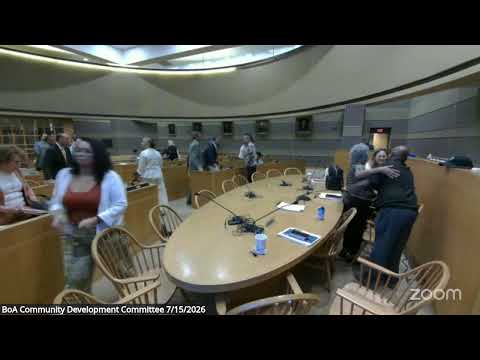
The New Haven Community Development Committee voted Thursday night to move a development and disposition agreement (DLDA) for 2 Church Street to the full Board of Alders, advancing a plan the city says will anchor a new innovation cluster and support workforce pipelines.
Developers and city staff told the committee the project centers on a roughly 200,000-square-foot lab and office building designed for companies working in quantum information and life sciences, plus a new plaza and associated public infrastructure. City staff described two off-site, federally funded improvements — a 20-foot Church Street South promenade to link Union Station with downtown and an Arch (Art) Street bridge rehabilitation — as integral parts of the package.
Why it matters: presenters said the project is intended to harness recent grant awards and university partnerships to attract firms and create career pathways for New Haven residents. Project leaders highlighted a state award of about $50.5 million tied to the first cluster and the federal National Science Foundation selection of Quantum CT as a regional engine, which they said strengthens the city’s pitch to prospective tenants.
Project details and funding: the development team said public infrastructure spending is roughly $45.9 million, with most funds coming from state and federal sources and the city’s contribution described in the presentation as “$2.34,” or roughly 5.1% of the public-infrastructure cost. Presenters said the public work is expected to enable more than $200 million of private investment in the block. Construction sequencing presented to the committee showed building work beginning in spring 2027 and related state infrastructure work beginning in spring 2028.
On mobility and design: city engineers described the Church Street Promenade as a federally funded, 20-foot pedestrian corridor separated from traffic, and summarized plans to rehabilitate the Arch/Art Street bridge to extend service life and improve pedestrian access. The project team said the building will include limited parking (well under 100 spaces) and expanded bicycle and pedestrian facilities to promote transit use.
Workforce commitments and community benefits: presenters and workforce partners outlined an array of local-hire, apprenticeship and training commitments tied to construction and permanent jobs — from preconstruction cohorts and career fairs to partnerships with Southern Connecticut State University, New Haven Works and other training providers. One presenter framed quantum as an industry “tool” that could accelerate life-science research and noted the project’s intent to create both high-skill and nontechnical jobs that feed a broader local economy: “Quantum is a tool that can accelerate computing power in life science,” said Carter Lynn Stanley, a project partner.
Public testimony: scores of witnesses — including university, workforce and business leaders, the Omni New Haven Hotel general manager and a state economic development official — urged the committee to send the agreement to the full board. Testifiers cited the NSF recognition for Quantum CT, prior apprenticeship and minority-hours metrics from earlier downtown projects, and the project’s potential to expand the city’s tax base and visitor economy.
What the committee did: after questions about traffic studies, cost-overrun contingencies and long-term maintenance, a motion to advance the DLDA was made and seconded. The committee voted in favor, and the item will be considered by the full Board of Alders.
Next steps: project staff said the development team expects to file a site-plan application in late August and that the city will continue coordinating traffic and construction logistics with state and federal partners. The DLDA package will appear on the full board agenda for final consideration.
Note on figures and timeline: dollar amounts and schedules presented to the committee were labeled as early estimates (the design is approximately 30% complete) and subject to value engineering and additional grant application steps, according to staff.