Get Full Government Meeting Transcripts, Videos, & Alerts Forever!
Get email alerts on the Land Use topic
No spam. Unsubscribe anytime.
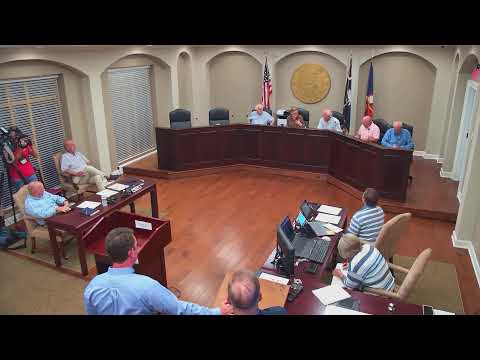
Planning commission recommends annexation of Clifton subdivision after split 3–2 vote amid traffic and flood concerns
Summary
The Clifton Planning Commission voted 3–2 to recommend annexation and zoning for a Veranda Homes subdivision, forwarding the final decision to City Council after extended discussion about traffic, flood risk, impact fees and a developer pledge to proceed regardless of a local denial.
The Clifton Planning Commission voted 3–2 to recommend annexation and zoning for a large subdivision proposed by Veranda Homes, sending the final decision to Clifton City Council after an hours-long public discussion.
Commissioners, city staff, the developer and a series of residents debated the project’s size, timing and impacts. A Veranda Homes representative told the commission the company would pursue the project even if the planning commission or council denied annexation: "We're going forward with it," the representative said when asked what would happen if the project were voted down at the local level.
Why it matters: The project proposes hundreds of lots on roughly 300 acres near Highway 56 in Clifton and would add both workforce and luxury housing products. Residents and at least one commissioner warned that traffic added by new subdivisions can be irreversible and that the market may not absorb several large projects at once.
Staff and the developer described the project schedule and protections the developer said it would accept. The developer told the commission the site would be built in at least five phases and estimated a 10–12 year buildout, with the first finished homes appearing about two years after permits are issued. The developer also offered to sign a development agreement to lock in lot sizes and other conditions the city requests.
On stormwater, Chrissy Terrell, an engineer with Blue Water Civil Design, said construction-phase ponds will be maintained by the developer and contractor until city and DES inspections close permits, after which responsibility moves to the homeowners association. Terrell said the project must "either meet what is happening now or reduce those flows up through the hundred year," and described detention ponds designed to hold and discharge runoff over a 24–72 hour period to avoid sudden downstream flows.
Financial and fiscal points drew questions. A city staff member said the impact fees tied to the neighborhood are "a little bit over $2,300,000" and described a broader, cumulative fiscal impact figure the staff member summarized as about "$6,400,000 to the city" over the life of the development. Staff also cautioned that impact fees are restricted revenue that cannot be used for general operations.
Residents said they were worried about traffic on Highway 56 and the potential for partially finished subdivisions if market demand falters. One resident warned, "the traffic problem is a problem that cannot be fixed later," and said observed truck traffic on the corridor has increased in recent years. Staff and the project engineer said a final traffic-study update will be prepared at the site-plan stage, using counts taken while school is in session and modeling future growth to determine whether turn lanes or other mitigation are required.
The commission first considered and rejected a motion to deny annexation and proposed zoning (the denial motion was recorded as 3–2 against). Commissioners then approved a motion to recommend annexation and zoning to the City Council by a 3–2 vote. The recommendation does not approve construction; site-plan approval, final traffic updates and any required state and federal permits (including U.S. Army Corps of Engineers permits for wetland impacts) remain to be completed.
Next steps: Clifton City Council will take up the commission’s recommendation in a future meeting. If the council grants annexation and zoning, the developer will return for site-plan approval, at which point the final traffic study and permit conditions will be completed.