Get Full Government Meeting Transcripts, Videos, & Alerts Forever!
Get email alerts on the Appropriations topic
No spam. Unsubscribe anytime.
Lawmaker presents FY2027 State Department national-security appropriations bill, emphasizes Israel and Taiwan aid and cuts to UN funding
Summary
A lawmaker presented the Fiscal Year 2027 National Security Department of State and Related Programs Appropriations Bill to the House, highlighting $3.3 billion for Israel, $500 million for Taiwan, $1.8 billion for Indo‑Pacific partners, and $2.7 billion in program reductions while imposing multiple funding prohibitions and UN cuts.
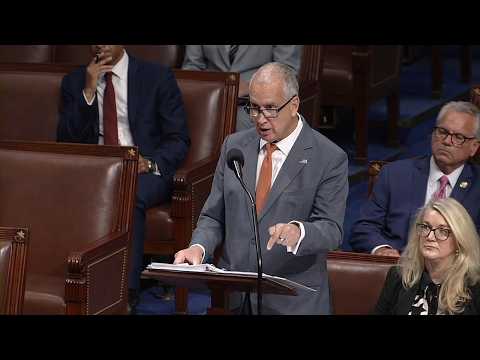
A lawmaker presented the Fiscal Year 2027 National Security Department of State and Related Programs Appropriations Bill to the House, saying it funds U.S. national‑security priorities while reducing overall spending.
"I'm pleased to present the fiscal year 2027 National Security Department of State and Related Programs Appropriations Bill to the House for consideration and for approval," the lawmaker said, opening debate on the measure and offering condolences for the recent death of Sen. Lindsey Graham.
The bill, the lawmaker said, continues Republican efforts to reduce spending in the subcommittee's jurisdiction: "House Republicans have delivered nearly $12 billion in responsible cuts within the purview of this subcommittee just since 2023," and the FY2027 bill includes "another $2.7 billion in reductions," he said.
Despite those reductions, the presentation highlighted targeted increases for allies and key programs. The lawmaker said the bill maintains $1.8 billion for partners in the Indo‑Pacific, including $500 million in military assistance for Taiwan, and provides $3.3 billion in security assistance to fully fund the United States–Israel memorandum of understanding.
The bill also prioritizes Western Hemisphere partnerships and measures to combat fentanyl trafficking, the lawmaker said, naming Paraguay, Argentina and Costa Rica as examples of countries receiving increased support.
On health programs, the lawmaker reaffirmed a committee emphasis on transitioning PEPFAR (the President's Emergency Plan for AIDS Relief) toward capable partner countries, saying partner governments are investing more of their own resources and that the committee expects to reduce U.S. funding while seeking to "maintain the same outcomes."
The presenter described multiple policy restrictions built into the measure: prohibitions on using funds in ways that enable repayment to the People's Republic of China and a ban on U.S. lending to the PRC through multilateral development banks; continued blocks on assistance to entities that support the Cuban military; a prohibition on assistance to the Taliban; and a stated withholding of certain funds from Mexico until water owed to the United States is delivered.
The bill would also cut assessed U.S. contributions to the United Nations by $1.8 billion, include no funds for the UN regular budget, and prohibit funds to certain international organizations the lawmaker named, including the World Health Organization and UNRWA, citing national‑security priorities.
The lawmaker said the package seeks accountability for victims of the Oct. 7, 2023 terrorist attack that killed U.S. citizens and preserves a requirement for the Secretary of State to consider UN voting records when allocating assistance. He added that the bill "supports full implementation" of certain executive orders tied to border security, free‑speech concerns, and limits on diversity, equity and inclusion programs.
Longstanding pro‑life provisions are retained, the presentation said, including a prohibition on funding to the UN Population Fund, which the lawmaker framed as upholding the president's policy on protecting life in foreign assistance.
The lawmaker closed by thanking committee staff on both sides of the aisle and urging his colleagues to support the measure; he then reserved the remainder of his time.
No formal motion or vote was recorded on the floor in this transcript excerpt.