Get Full Government Meeting Transcripts, Videos, & Alerts Forever!
Get email alerts on the Municipal Budget topic
No spam. Unsubscribe anytime.
Lincoln council hears public warnings on deep service cuts as manager offers compromise budget
Summary
At a July 15 public hearing, the Lincoln Town Council reviewed three FY2027 budget options. The town manager presented a compromise that trims capital and nonpersonnel costs while aiming to avoid layoffs; residents urged protecting police and fire staffing and the town attorney warned that certain council-led revisions could invite litigation under the charter.
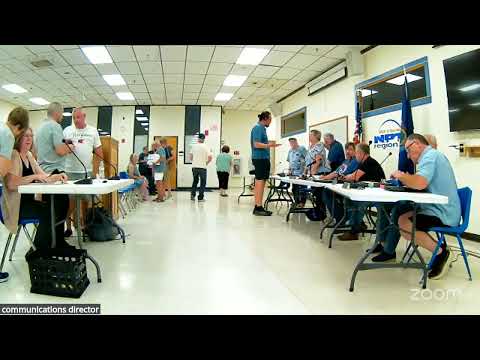
The Lincoln Town Council held a public hearing July 15 to review three competing FY2027 budget options and hear residents' concerns over proposed cuts to town services.
The town manager presented a department-by-department compromise that reduces the total budget roughly 5% from the original proposal by deferring capital purchases and trimming nonpersonnel lines while trying to avoid layoffs, the manager said. He described specific reductions, including deferring a proposed $175,000 fire truck, trimming training budgets for code enforcement and fire, removing a school resource officer position and delaying filling 1.5 police positions, and cutting about $69,000 in portable lights and $55,000 in contractual services in public works.
"We tried to cut anything we could that didn't involve personnel," the town manager said, and urged councilors and the public to focus on both cost savings and the potential effect those cuts might have on levels of service.
Residents who spoke during the open forum urged sharper focus on revenue and assessing while warning that deep, across-the-board reductions would endanger essential town services. "By reducing their budget, you are reducing essential services," said Susan Laffey, who identified herself as a Lincoln resident and taxpayer. Several speakers pressed the council to prioritize public safety funding and to explain clearly how each line item would affect services such as snow removal, road maintenance and emergency response.
Local business leader Bill Thornton, in a written statement read into the record, opposed the deepest cuts and said recent turnover and public controversy have already undermined business confidence. "Deep cuts to core services, particularly public safety, assessing, and other basic town functions, will likely make this worse," the statement read.
Several speakers said the town's underlying revenue problem predates the current budget dispute. "The problem is revenue," resident Jerry Ireland said, urging a longer-term plan to improve assessing and collect unpaid taxes. Other public commenters suggested operational changes at the transfer station and called for improved transparency of budget materials online.
The town attorney advised caution on the council's procedural path. Reviewing Town Charter section 602, the attorney told the council that its authority is limited to "simple amendments" to the manager's base budget after public notice and opportunity to be heard. He said adopting the council-led June 22 revision (the budget option labeled "Column B") could prompt petition-driven challenges and potential litigation. "If you adopt column B, we're going to be in a position where we're going to be spending money ... on attorneys," he said, recommending the council consider the manager's budget or the manager's amended compromise to reduce legal risk.
Council members moved and seconded a procedural motion to present the three comparative budget columns to the public; that motion carried by voice vote. The hearing record shows the manager's amended total and the comparative figures that the manager and attorney cited during presentation; residents repeatedly asked that the revenue tab be made clear alongside expenditures before a final vote.
A final budget vote is scheduled for July 22. The council adjourned after the public hearing.