Get Full Government Meeting Transcripts, Videos, & Alerts Forever!
Get email alerts on the Local Taxes topic
No spam. Unsubscribe anytime.
City manager: Acworth's advertised tax increase reflects higher collections, not a millage-rate hike
Summary
City staff told an administrative millage-rate hearing the city is not proposing a higher millage rate for homesteaded properties; the advertised 4.45% revenue increase reflects growth and reassessments. A resident urged clearer online notice and brighter downtown signage.
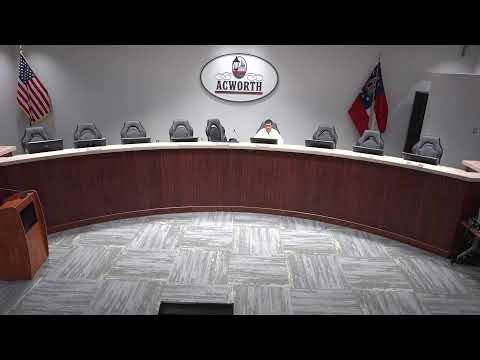
The City Manager opened an administrative public hearing at about 9 a.m. to explain why the city is required to advertise an increase in tax collections even though the city is not proposing a higher millage rate for homesteaded properties.
City Manager said the notice is required when total tax collections exceed the prior year and that the increase reflects new growth, property resales at higher values and reassessments of commercial and non-homesteaded residential properties. "The millage rate, the rate at which you are taxed, is not being proposed to be increased in the city of Acworth," the City Manager said during the presentation.
Why it matters: Required state-advertising language can say the city is "raising taxes by 4.45%" because the city expects to collect about 4.45% more total revenue than the year before. Staff said the board was being presented with a tentative millage of 8.95 mills (which staff noted is 0.381 mills higher than a reported rollback of 8.569), but emphasized that homeowners with an active homestead exemption will not pay more city tax unless the board sets a higher millage rate.
Staff ran a numerical example to show the effect of exemptions. Using a $200,000 home assessed at 40% ($80,000 taxable), the City Manager said the city portion at 8.95 mills would be about $716 per year; with an additional $4,000 senior exemption the taxable base falls and the city portion would be about $680.20, a roughly $35.80 annual saving.
During public comment, Ben Kazerskis of 4274 Maple Drive praised city services but criticized the city's outreach. "There's definitely an inner circle of the city government that communicates amongst itself very, very well," Kazerskis said, and urged clearer posting of agendas and easier access to archived meetings. He suggested using the city's e-news and a communication box on utility bills to make hearings and exemption information more visible and proposed brighter, livelier downtown signage.
The City Manager said the forum was a comment-only hearing and that staff would remain afterward to answer individual questions. He declined to address downtown signage in the millage hearing, calling it outside the hearing's scope, and walked attendees through the city website, the pinned social media link to live streams and archives, and the schedule for mayor and board meetings. The administrative hearing was adjourned at 09:25.
Next steps: Staff identified this as the second of three required public hearings; the final hearing and any formal adoption of the millage rate were scheduled before the mayor and board later the same day.