Get Full Government Meeting Transcripts, Videos, & Alerts Forever!
Get email alerts on the School Facilities topic
No spam. Unsubscribe anytime.
Board finds Millburn High School synthetic‑turf and lighting project consistent with master plan, recommends high‑quality padding and PFAS limits
Summary
After a public hearing and expert testimony, the planning board recommended the Millburn High School synthetic‑turf and lighting capital project is consistent with the master plan and unanimously forwarded recommendations that the district confirm high‑quality padding to extend field life and avoid PFAS‑containing materials where feasible.
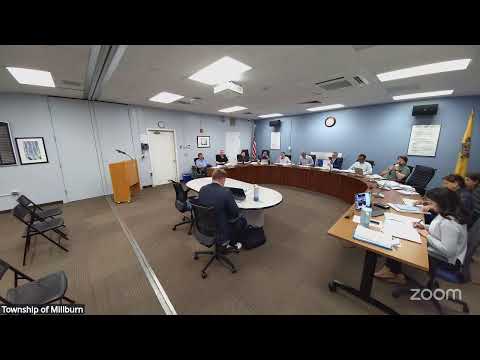
The Real North Township Planning Board on July 15 recommended that Millburn High School’s proposed synthetic‑turf and lighting upgrades be considered consistent with the township master plan and forwarded two recommendations to the Board of Education: (1) confirm use of a high‑quality underpad to maximize field life and (2) minimize selection of materials containing PFAS.
Rob Walsh, chief civil environmental engineer at EI Associates, testified under oath as the project’s designer and explained the plan to convert the varsity field and two multipurpose areas to synthetic turf (a plan‑B totaling roughly 189,000 square feet). Walsh told the board the design uses a permeable 12‑inch crushed‑stone base with underdrain, that the DEP granted construction verification last week, and that bidders have been submitted and evaluated; construction is slated to begin in early August with an estimated duration of about four months.
Walsh said the turf systems bid included three options: an organic (non‑rubber) infill with a pad, a non‑infill dense pad system, and a manufactured (non‑recycled) rubber infill. He stated the district is leaning toward an organic infill and described benefits of synthetic turf for playability and safety: engineered cushioning (measured by G‑Max), greater playable hours after rain, and reduced need for herbicides and fertilizers. He acknowledged documented field‑temperature concerns on some synthetic systems and described monitoring and mitigation approaches (for example, irrigation during extreme heat).
Board engineers addressed floodplain and stormwater questions, explaining that recent regulatory updates raised the regulatory flood elevation by two feet and that the proposed turf area follows an existing grade with permeable base design; the witnesses said the DEP no longer treats the selected turf system as impermeable pavement in its current policy, which reduced stormwater design complexity for the project.
During public comment, resident Jeffrey Felt asked whether all three fields would include the 12‑inch crushed‑stone pad and which option the engineer would recommend; Walsh confirmed the pads and reiterated that the district favors the organic infill option. Public speakers expressed support for increased capacity and more playable hours; the board also discussed lighting plans that use LED fixtures with sharp cutoffs and poles up to 100 feet to serve multiple fields.
Chair moved that the board find the project consistent with the master plan and forward the two recommendations (confirming padding quality and minimizing PFAS) to the Board of Education; the motion passed on a roll‑call vote recorded by the clerk.