Get Full Government Meeting Transcripts, Videos, & Alerts Forever!
Get email alerts on the Environment Water Quality topic
No spam. Unsubscribe anytime.
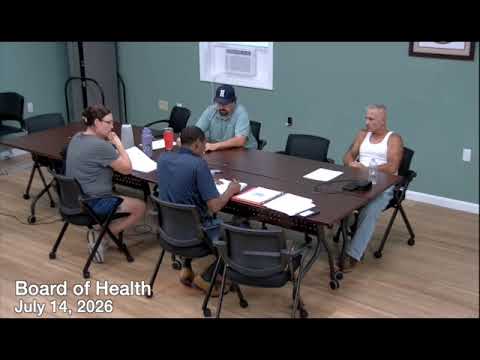
Hubbardston board reviews PFAS results, finds levels below state guidance
Summary
At a Town of Hubbardston Board of Health meeting, staff presented a 2025 water report showing PFAS at 7.28 ng/L — below the state guidance discussed (~20 ng/L). Members agreed to post reports online, review prior years for trends, and consider restoring a private‑well testing program.
The Town of Hubbardston Board of Health reviewed 2025 water testing results and discussed next steps for monitoring PFAS and other water contaminants.
The board’s staff member reported an annual consumer water report for a local public system showing PFAS at 7.28 nanograms per liter. Chair (Speaker 1) said that figure is under the state guidance discussed at the meeting — “it’s actually 7.28 nanogram per liter, but it seems like the limit is actually 20,” — and recommended comparing the reading with 2023 and 2024 results to detect any upward trends.
Why it matters: PFAS (per‑ and polyfluoroalkyl substances) are persistent in the environment and have been linked to long‑term health concerns. The board emphasized transparency and public access to data: the chair directed staff to ensure required consumer confidence reports are posted on the town website and noted they are also available on state public‑health and environmental websites.
Members discussed private wells and a discontinued program that had previously allowed free well testing for PFAS. The chair said reviving a private‑well testing program would help create a townwide “heat map” of PFAS exposure: “If we have a moment to have every single resident test the well water… we can have a layout — a heat map,” the chair said. The board agreed to follow up with state public‑health officials about restoring or identifying funding for private‑well testing.
The board also reviewed routine drinking‑water analytes included in the reports (lead, copper, manganese, iron, nitrate) and the requirement that public systems make the consumer reports accessible to the public. Chair and members noted that missing postings will be corrected and that the state notifies local boards if action is required.
What’s next: The board asked staff to retrieve past annual reports to compare historical PFAS levels and to pursue options for private‑well testing with state agencies. The board did not take regulatory enforcement action at the meeting; staff said they would monitor and report back if trends suggest further steps.
Sources and attributions: Quotes and numbers are from the Board of Health meeting and the water report presented at the meeting; the board cited Mass. DPH and MassDEP guidance and weekly beach testing conducted by state contractors.