Get Full Government Meeting Transcripts, Videos, & Alerts Forever!
Get email alerts on the Consolidated Performance Evaluation Report topic
No spam. Unsubscribe anytime.
Syracuse City presents CAPER for program year 51, reports homelessness services and housing activity
Summary
Syracuse City officials presented the draft Consolidated Annual Performance and Evaluation Report (CAPER) for program year 51 (May 1, 2025–April 30, 2026), outlining HUD-funded housing and community development activities including street outreach, rapid rehousing, eviction prevention and neighborhood revitalization efforts.
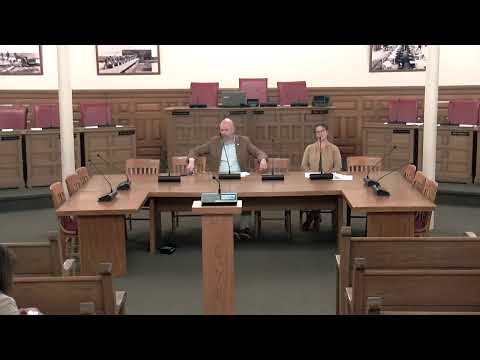
Commissioner Michael Collins of Syracuse City's Department of Neighborhood and Business Development presented the city’s draft Consolidated Annual Performance and Evaluation Report (CAPER) for program year 51, covering May 1, 2025–April 30, 2026, and outlined outcomes from HUD-funded housing and community development programs.
Collins said the city administers funding from the Community Development Block Grant, the HOME Investment Partnerships program and the Emergency Solutions Grant, and noted housing opportunities for persons with AIDS funding is delegated to the state. He told attendees the draft CAPER and printed copies are available and that the city has until the end of the month to submit the report and accompanying materials to the U.S. Department of Housing and Urban Development.
On service outcomes, Collins said, “we served 369 unique individuals through the street outreach programming” funded by ESG, and that “the rapid rehousing program served 64 individuals.” He also reported that homeless prevention work served 254 individuals and said prevention is critical to keeping people in their homes and reducing the need for street outreach.
Describing program priorities tied to the city’s five-year consolidated plan (2025–2029), Collins listed goals that include preserving safe, affordable and stable housing; promoting affordable homeownership; producing new affordable housing; preventing and addressing homelessness; providing housing resources and neighborhood public services; and strengthening neighborhood stability and economic inclusion.
Collins said CDBG-year activities emphasized home-improvement direct assistance, eviction prevention and landlord–tenant counseling, efforts to reduce barriers to fair housing, youth enrichment programs, and demolition or rehabilitation to address vacancy and blight. He said much of the HOME and revitalization work occurred citywide but was concentrated in neighborhood stabilization areas on Syracuse’s Northwest and South sides.
He named staff and partners involved in grant administration and service delivery, including Tanya Eastman, director of Neighborhood Grants; Renee Schwanier, HOME program administrator; Sue McMahon, ESG program administrator; Michelle Sapanski, deputy commissioner; and community partners such as CNY Fair Housing, My Father’s Kitchen, Home Headquarters, Syracuse Northeast Community Center, Rescue Mission and the YWCA.
Collins invited public comment, set a three-minute limit for speakers, waited five minutes for stragglers and — noting there were no public speakers — closed the meeting. The draft CAPER will be posted on the Department’s webpage at syr.gov and submitted to HUD by the end of the month.