Get Full Government Meeting Transcripts, Videos, & Alerts Forever!
Get email alerts on the Small Business Regulation topic
No spam. Unsubscribe anytime.
Applicant withdraws Harpswell auto-restoration site-plan application after planner review and neighbor concerns
Summary
An applicant withdrew a site-plan application for an auto-restoration business after the town planner concluded the lot is nonconforming and cannot host a second principal use; neighbors at the July 15 meeting raised concerns about noise, lead-based paint, solvents and stormwater runoff.
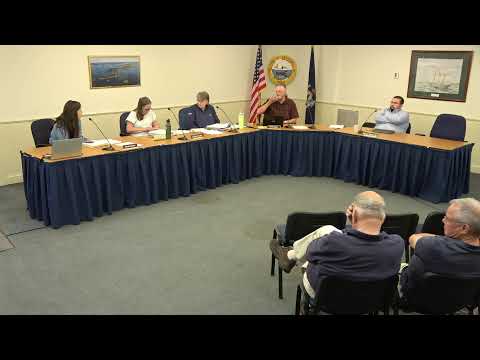
The Harpswell Planning Board on July 15 recorded the withdrawal of Scott Stottmeister’s site-plan application for an auto-restoration business after the town planner said the property does not meet dimensional and shoreland-zone requirements for adding a nonresidential use.
Planner comments noted the building exceeds the 900-square-foot limit for a home-occupation accessory structure and the lot is nonconforming; adding a second principal use would require additional lot area and frontage that the property lacks, and a variance was not available because part of the lot lies in the shoreland zone. Following that assessment, the applicant submitted a written rescission asking the board to remove the application from the July 15 agenda.
Neighbors used the public-comment portion of the meeting to raise environmental and health concerns tied to typical restoration activities. Robert Shuster, who owns the adjacent property between the library and the site, warned about lead- and cadmium-based paints, solvents and hydrocarbon leaks from stored cars washing into nearby marshlands and affecting residents’ water. He asked how paint and solvent waste would be controlled and where runoff would go.
Longtime resident Barry Stewart — who said he has experience in automobile restorations — acknowledged that restorations can be managed responsibly but emphasized that the barn sits in a tight residential setting, cited past loud engine work, expressed worry about water-quality effects during drought conditions, and questioned local enforcement options if impacts arise.
Board members advised neighbors to raise technical questions directly with the applicant and to notify the town if they are unsatisfied with responses; chair Dan Hoback noted that the town and state nuisance statutes provide remedies if a use becomes unreasonable. Because the application was withdrawn, the planning board took no formal action to approve a business use.
During the discussion, members suggested the planning department consider drafting guidance or safeguards for home occupations that could mitigate potential risks associated with materials and water-supply vulnerabilities on small lots.
The board adjourned at the end of the agenda.