Get Full Government Meeting Transcripts, Videos, & Alerts Forever!
Get email alerts on the Residential Docks topic
No spam. Unsubscribe anytime.
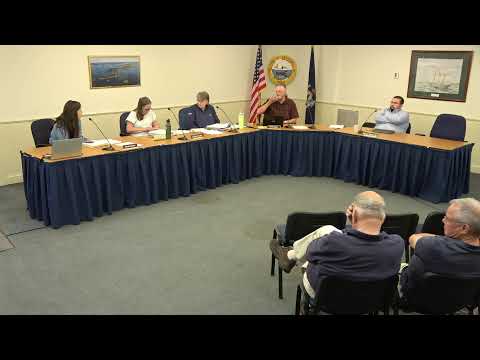
Harpswell planning board continues two High Head dock applications pending attorney review of subdivision rule
Summary
The Planning Board approved planner findings that two proposed seasonal residential docks at 209 and 187 High Head meet shoreline zoning standards but continued formal decisions about a separate legal question — whether a 1970s-era development qualifies as a "subdivision" under section 15.3.0.9 — until counsel can advise. Both matters were scheduled for Aug. 19, 2026.
The Harpswell Planning Board voted July 15 to find that two proposed seasonal residential docks in the High Head area meet most Shoreland Zoning Ordinance standards, but the board withheld a final legal determination on whether an old-development rule bars individual docks in recorded developments.
Chair Dan Hoback opened the public hearing and read the planner’s recommended findings that the two applications meet section 15.3 standards covering number of docks, shore access soils and erosion controls, absence of developed beaches, fisheries impacts (with seasonal removal of ramps and floats), noncommercial use and pier dimensions. Board members recorded unanimous roll-call ayes on the factual findings for both properties: 209 High Head (applicants David and Laura Abel, represented by Tim Forrester of Flycatcher LLC) and 187 High Head (applicants Christopher and Richard/Mindy Muddy, also represented by Forrester).
“We will make all the findings that we can tonight,” Hoback said, but he emphasized the planning board would not resolve a legal question in section 15.3.0.9 without advice from the town attorney.
At the hearing, attorney Kristen Collins (transcript: "Pretty Flaherty") urged the board to distinguish legacy developments from modern subdivisions. Collins argued the High Head plan predates the statutory subdivision definition effective Sept. 23, 1971, and therefore the recorded development conveys access to a yacht club rather than a community wharf, pier or float; applying the modern subdivision restriction to older developments, she contended, would have far-reaching unintended consequences for property owners in many older Harpswell developments.
Collins said the board’s prior denial of a similar dock in High Head hinged on an interpretation tied to a subsequent lot-line adjustment that brought that property under current subdivision rules; she argued that factual distinction matters and urged counsel review.
For the Abel site at 209 High Head, Forrester described a layout with a 4-by-4 upper landing, a 4-by-18 ramp, a 5-by-24 pier supported on two ledge-pinned bents, a 3-by-42 aluminum ramp and a 10-by-20 float sized to carry a smaller sailboat while the owners’ 40-foot sailboat uses an existing mooring offshore. For the Muddy site at 187 High Head, Forrester said the applicant will remove an existing access structure and install two 50-foot, 5-foot-wide aluminum pier sections with a central bent and end bent, a 3-by-50 ramp and a 12-by-20 float; he told the board the Department of Environmental Protection approved that project the same day.
Board members who visited both sites reported steep access, rockweed-covered ledge and limited upland disturbance; the planner’s findings noted no upland vegetation removal was required and that floats/ramps would be stored upland in winter. The harbor master’s review was noted as a forthcoming step before select board approval.
Rather than decide the legal question at the meeting, the board voted to continue both matters to Aug. 19, 2026 at 6:30 p.m. (or to a date agreed between counsel) so the town attorney can review the interpretation of section 15.3.0.9 and respond to arguments presented by Collins.
The board’s continuation preserves the factual findings already adopted while reserving the final legal determination about whether recorded access to a yacht club amounts to deeded rights to a community dock under the ordinance. If the town attorney concurs with the board’s prior legal reading, the continuation will allow the board to incorporate counsel’s guidance into a decision; if not, further briefing or clarification may be requested.
The board closed the items for that night and asked applicants and counsel to confer with the town attorney before the Aug. 19 meeting.