Get Full Government Meeting Transcripts, Videos, & Alerts Forever!
Get email alerts on the Darfur Investigation topic
No spam. Unsubscribe anytime.
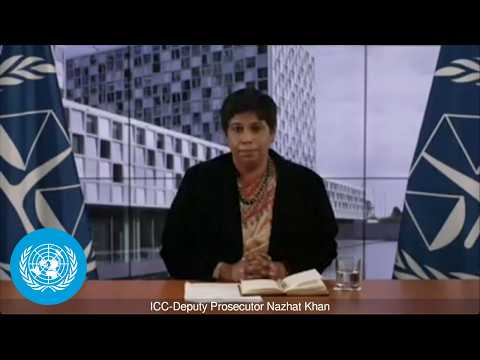
ICC prosecutor tells Security Council recent Darfur crimes mirror past atrocities, urges action and announces charge withdrawal application
Summary
The International Criminal Court’s prosecutor told the Security Council that evidence collected in eastern Chad links recent atrocities in Darfur to senior perpetrators, urged states to act to prevent further crimes, and announced an application to withdraw charges against Abdullah Banda Abu Bakr Noorain to be addressed at a status conference next week.
The prosecutor for the International Criminal Court told the United Nations Security Council that recent evidence gathered in eastern Chad links new atrocities in Darfur to high-level perpetrators and warned that more large-scale crimes may be imminent.
Speaking to the Council, the prosecutor described meetings in refugee camps in Gosbeyda and Farshana, where displaced Darfuri told of being driven from their homes and living "in conditions of acute hardship." The prosecutor said survivors recounted killings, repeated rapes and children being attacked and traumatized.
"We cannot say we did not know," the prosecutor said, urging Council members and all states "to act now to prevent further atrocities, to take responsibility, and ensure that those likely to suffer yet again from what is unfolding are given protection." The remarks, the prosecutor said, reflected patterns of crimes that led the Council to refer the situation in Darfur to the ICC in 2005.
The prosecutor described what he called a "paradigm shift" in the office's investigations, saying recent work — including "over 130 interviews of victims, satellite imagery, documentary evidence, audio visual material, and other digital assets" — has strengthened the legal finding that war crimes and crimes against humanity have been committed in locations cited in the briefing and has allowed the office to draw links to senior contributors.
The prosecutor acknowledged legal and procedural limits on public disclosures about potential arrest applications but said the office had secured "vital evidence" that will allow it to hold senior contributors to account. He also urged greater financial and practical support for reparations, including contributions to the ICC Trust Fund for Victims.
The prosecutor thanked the government of Chad for its "steadfast support" and said the office will develop a new framework of cooperation with Chadian authorities to assist investigations and victim interviews. He also said cooperation from the government of Sudan "has remained on a positive trajectory," enabling further deployments, but he urged the Rapid Support Forces to engage with the Office of the Prosecutor, saying their lack of cooperation amounts to a violation of Security Council Resolution 1593.
The prosecutor announced that the Office of the Prosecutor had applied to withdraw charges against Abdullah Banda Abu Bakr Noorain in relation to prior crimes in Darfur; he said the matter will be addressed at a status conference next week and that further details will appear in the office's next report.
Concluding, the prosecutor repeated an appeal for collective action: he asked states, United Nations members and accountability partners to support intensified collaboration so victims can see tangible results from the justice process.
The Security Council briefing included no vote or formal Council decision; the prosecutor’s announcements set out next procedural steps, including the upcoming status conference on the withdrawal application.