Get Full Government Meeting Transcripts, Videos, & Alerts Forever!
Get email alerts on the Emergency Management topic
No spam. Unsubscribe anytime.
Winter-storm commission urges immediate external review and pushes for OEM accreditation
Summary
The Winter Storm Response Commission reviewed an interim report draft and recommended an immediate external review of Metro's Office of Emergency Management, with a likely follow-up of formal accreditation and improved access to the city's emergency management plan under controlled conditions.
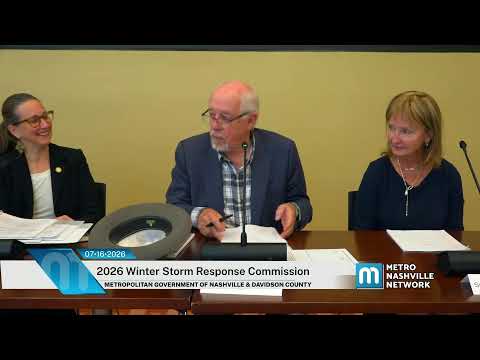
The Winter Storm Response Commission voted to approve the meeting minutes, then moved quickly into a substantive review of a draft interim report that recommends an external review and likely accreditation for the Office of Emergency Management (OEM).
The commission's chair said the draft is an early '0.9' version intended to capture salient threads and urged members to focus on major themes rather than line edits. Commissioners agreed the report should foreground systemic shortcomings and clear recommendations in the executive summary so the mayor and public see immediate next steps.
Commissioners argued an external expert review should come before or alongside any accreditation process. Several members said a two-step path''commission-contracted review to identify structural gaps, followed by a formal accreditation process (for example EMAP-style accreditation)''would give OEM a roadmap the city could act on quickly.
Commission members emphasized that accreditation typically covers not only plans but training and exercises. Johnny Vanderpool and other commissioners said accreditation would prompt necessary exercises and capability-building across departments, not just within OEM, and that training is a critical complement to written plans.
The group discussed the practicalities of the review. Commissioners asked staff to clarify the consultant scope and to seek reviewers with experience examining OEMs in comparably sized jurisdictions. Members also flagged that a reviewer will need access to internal documents; the staff noted some documents (the citywide comprehensive emergency management plan) are treated as confidential under state law and may require redaction or controlled access.
Legal counsel told the commission that state statutes allow certain emergency-management materials to be kept confidential for security reasons, and commissioners proposed controlled options: limited, redacted excerpts, or an in-person secure 'reading room' where commissioners could examine portions of the plan under supervision.
The chair asked staff to benchmark OEM budgets and capabilities among peer cities to determine whether Metro's funding and organizational structure are comparable and to clarify how much of OEM's budget is general fund versus grants or FEMA assistance. Staff said interns had begun collecting budgets from U.S. cities in the 500,000'1,000,000 population range and would report findings in the final report.
The commission asked staff to make the interim recommendations explicit, list pending information requests (including whether selected documents or excerpts can be provided under controlled conditions), and prepare a concise paragraph describing what a state emergency declaration and a local declaration each allow in terms of procurement and operational authority.
The commission will circulate a revised interim draft that highlights the recommended external review, proposed accreditation steps, and concrete next actions for the mayor and council. The chair and staff will incorporate members' feedback and determine whether further public meetings are needed before publishing the interim report.