Get Full Government Meeting Transcripts, Videos, & Alerts Forever!
Get email alerts on the Gmh Procurement topic
No spam. Unsubscribe anytime.
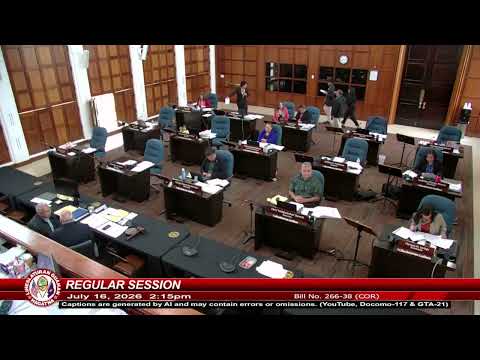
Committee adopts a package of Guam Memorial Hospital procurement changes after debate over notice
Summary
The Committee of the Whole approved several floor amendments to Chapter 12 that give Guam Memorial Hospital (GMH) more procurement flexibility—allowing limited advance payments, raising the small‑purchase threshold to follow the federal simplified acquisition threshold, and permitting use of competitively awarded contracts from other jurisdictions (piggybacking). Senators objected that the measures were inserted without separate public hearings and pressed for vendor notice and reporting safeguards.
The Committee of the Whole approved a set of amendments intended to give Guam Memorial Hospital (GMH) more flexibility to buy equipment, medicines and services that currently require nonstandard payment terms or lengthy procurement processes.
Proponents said the changes address practical problems for an island hospital that must sometimes prepay vendors or rely on mainland competitively-awarded contracts. Senator Montanani said the small‑purchase ceiling "ties it instead to the federal simplified acquisition threshold, which is currently $350,000," and requires at least three written quotes and quarterly reports to the Speaker to guard against abuse.
Another amendment authorizes limited advance payments for GMH when market terms require prepayment — for example, specialty parts or pharmaceuticals — and an author explained that without the exemption "a government rule that forbids advanced payment... simply stops the order, forcing the hospital toward more expensive alternatives or leaving a gap." Supporters argued the changes do not appropriate new money and are confined to procurement process changes rather than spending authority.
Opponents repeatedly raised process and transparency concerns. Several senators objected that the procurement and contracting reforms had not been the subject of a separate, duly noticed public hearing and argued that attaching new legal authorities to a budget provision circumvents the public-notice requirement under 2 GCA §2108. One senator warned the changes could "lock out local procurement" or favor off‑island vendors unless the law specified safeguards and notice for local suppliers.
Chair rulings and the will of the body determined the outcome: after extended debate and points of order about notice requirements the committee adopted the GMH advance‑payment exemption, the higher small‑purchase threshold tied to the federal simplified acquisition standard, and a piggybacking authority that allows GMH to join existing competitively awarded contracts from other jurisdictions — subject to documentation and reporting requirements. The amendments were presented as tools to reduce procurement delays that can disrupt patient care.
The committee left several transparency and oversight conditions in place, including documentation rules, attestations by the hospital contracting officer that a referenced contract resulted from a competitive process, an express prohibition on splitting purchases to evade thresholds, and quarterly reporting requirements. The measures’ proponents said those steps will enable public review while fixing supply‑chain problems that can affect hospital operations.
Next steps: The approved language will be incorporated into Chapter 12 of the substitute budget; senators who sought more public input said they may pursue standalone bills with hearings to refine parameters and protections for local vendors.