Get Full Government Meeting Transcripts, Videos, & Alerts Forever!
Get email alerts on the Government Oversight topic
No spam. Unsubscribe anytime.
Witness tells Senate committee partisan attacks on inspectors general help fraudsters
Summary
At a Senate Committee hearing, a witness said firings and funding cuts to inspectors general weaken oversight and urged Congress to strengthen protections, boost resources, and require end-to-end transparency and subaward reporting; committee members also pressed concerns about presidential pardons for convicted fraudsters.
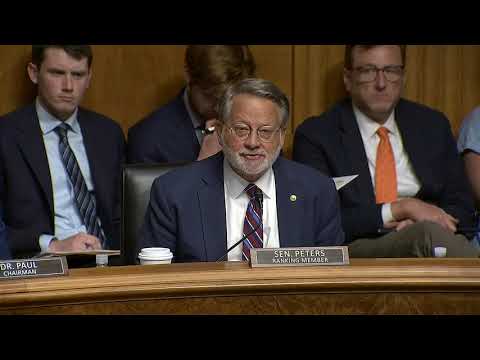
At a Senate Committee on Homeland Security and Governmental Affairs hearing, a witness told committee members that partisan attacks on inspectors general and cuts to oversight staff and funding make it harder to detect and deter fraud.
A committee member opened by saying President Trump had fired 19 inspectors general and cited a May 21, 2025 report asserting those removed had identified more than $50 billion in government savings; the member asked whether such partisan attacks benefit fraudsters. The witness replied, "Yes. I would say they absolutely benefit fraudsters. They politicize the entire endeavor of going after waste, fraud, and abuse," and urged lawmakers to "strengthen, empower, and protect" existing watchdogs such as inspectors general and the Government Accountability Office.
The witness recommended giving oversight offices more resources and greater political insulation so they can operate without "fear or favor" and without partisan meddling. On practical steps to reduce improper payments, the witness said, "Front-end verification is really important," and advocated for end-to-end transparency and expanded reporting requirements that follow federal dollars from appropriations through prime recipients to subrecipients, including improved subaward reporting.
Committee members also raised concerns about the presidential pardon power. One member noted that "over 2 dozen" convicted fraudsters were pardoned and cited the cases of Lawrence Duran and Trevor Milton, saying victims had been deprived of restitution. The witness called pardoning convicted fraudsters "a completely nonsensical approach to rooting out waste, fraud, and abuse," and suggested constitutionally viable reforms such as greater transparency and a stronger internal DOJ pardon process; as a theoretical position the witness said a constitutional amendment to remove the pardon power could be considered, though he characterized that as a broader, more fraught step.
The exchange stressed two central themes: that weakening independent oversight can hamper fraud detection, and that improving verification and reporting across the federal funding chain would make it harder for fraud to go undetected. The excerpted testimony did not include any formal votes or committee actions.