Get Full Government Meeting Transcripts, Videos, & Alerts Forever!
Get email alerts on the Mosquito Control topic
No spam. Unsubscribe anytime.
Residents and Seminole Community Garden urge council to suspend routine blanket mosquito spraying and form a vector committee
Summary
At a public hearing, Brandy Wells of the Seminole Community Garden urged Seminole leaders to prioritize prevention — source reduction, larvicide 'dunks', bat boxes and education — and to reserve adulticide spraying for surveillance-driven, last-resort responses; council directed staff to begin forming a community committee to develop a plan.
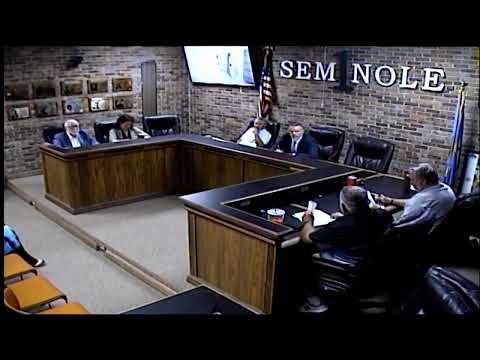
Brandy Wells, representing the Seminole Community Regenerative Initiative Permaculture Transformation (Seminole Community Garden), urged the Seminole City Council to shift the city’s mosquito-management strategy away from routine blanket spraying toward an integrated, prevention-first approach.
Wells told council members the group’s research — which reviewed CDC, EPA and Oklahoma State Department of Health guidance — shows most mosquitoes breed in small, preventable sites such as buckets, clogged gutters and tires. “We want fewer mosquitoes and a healthier community,” she said, arguing that targeting larvae and removing breeding habitat reduces long-term adulticide dependence.
Wells recommended several measures: suspend routine citywide adulticide spraying while a new plan is developed; distribute mosquito-dunk larvicides (a Bacillus-based product) for standing water; install bat boxes and improve habitat for natural predators; and create a vector-control advisory committee of local experts and stakeholders to review surveillance data and make spraying decisions. “We’re not asking you to simply stop spraying,” she said. “We’re asking that you replace a single reactive approach with a long-term science-based mosquito management program.”
Resident Michael Rudd, who has built bat houses locally, described bats’ role in insect control and told the council that each bat can eat thousands of insects nightly; he said bat boxes are inexpensive and low-maintenance and that businesses might sponsor installations.
Councilors asked whether the county and state use surveillance and how often West Nile virus shows up in traps. Wells said the Seminole County Health Department uses weekly trapping and sends samples to state labs for testing and that statewide averages for West Nile have been low; she declined to quote a specific recent number from memory. City staff and council members acknowledged differences in local practice — noting that some municipalities use surveillance first and reserve spraying as a last resort — and asked staff to clarify current local treatments (BTI pellets, ditch treatments) and enforcement of nuisance ordinances.
After questions and discussion about whether to create a committee or a formal board with enforcement authority, council members and staff agreed to begin forming a committee to draft a recommended mosquito-management plan and return with options on powers, enforcement needs, and funding. Staff said they would recruit stakeholders (city staff, health department representatives, community group members and subject-matter experts) and report back to council.
The council did not adopt a formal policy at the hearing but directed staff to start the committee process and to work with presenters and county health officials on surveillance and the draft plan.