Get Full Government Meeting Transcripts, Videos, & Alerts Forever!
Get email alerts on the Information Operations topic
No spam. Unsubscribe anytime.
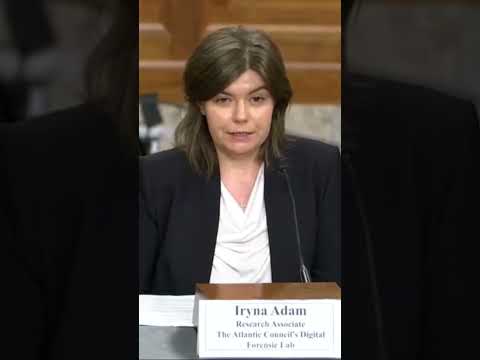
Witness: Kremlin uses internet shutdowns, phone checks and media networks to push pro‑Russian narratives in occupied Ukrainian regions
Summary
A witness told the Commission that Russian authorities are using information blackouts, phone searches and a coordinated network of television, radio and thousands of Telegram channels to promote pro‑Russian narratives and suppress Ukrainian identity in Crimea, Donetsk, Luhansk, Zaporizhzhia and Kherson.
A witness told the Commission on Security and Cooperation in Europe (Helsinki Commission) that the Kremlin is carrying out a broad information campaign in occupied Ukrainian territories intended to reshape local identity and undercut Ukrainian media influence.
The witness said Moscow has set a long‑term demographic goal—"By 2036, the Kremlin wants over 95% of its population to self identify as Russian"—and is using what the witness called an "information blockade" and a coordinated media ecosystem to try to achieve that aim in Crimea, Donetsk, Luhansk, Zaporizhzhia and Kherson. The witness described frequent internet cutoffs, phone checks by authorities and restrictions on Ukrainian and Western outlets in the temporarily occupied areas.
According to the witness, the information vacuum created by those restrictions has been filled by Russian state‑aligned outlets and curated channel packages. "Residents were even given free connections to a package of television channels called Russkiy Mir," the witness said, characterizing the package as promoting an ideology aligned with Moscow's narratives. The witness added that Russian‑controlled Telegram channels, television channels, radio stations and news websites have operated nonstop in the occupied territories since 2023.
The witness described a joint investigation with a Ukrainian partner, Open Minds, that found "over 3,600 Telegram channels that have sent over 300,000 comments on Telegram between January 2024 and April 2025" aimed at populations in the occupied territories. The witness said some channels posted as many as 1,300 comments in a single day and that many accounts used automated or semi‑automated techniques to tailor messages for audiences in those territories rather than using the same content distributed inside Russia.
The witness summarized the content strategy as producing three broad categories of comments: strongly pro‑Russian messages, strongly pro‑Ukrainian messages, and more neutral posts that called for peace. The witness said the pro‑Russian material frequently included disinformation narratives that justified Russia's war effort and highlighted alleged rebuilding activities.
The transcript includes no record of a formal vote or subsequent action on these findings. The hearing record also does not identify further immediate steps by the Commission on the witness's testimony.