Get Full Government Meeting Transcripts, Videos, & Alerts Forever!
Get email alerts on the Accessory Dwelling Units topic
No spam. Unsubscribe anytime.
Seaside County Sanitation District adopts proportional ADU capacity-fee ordinance; consent agenda and budget readopted
Summary
The Seaside County Sanitation District board on July 14 adopted an ordinance to calculate proportional capacity fees for accessory dwelling units (ADUs) to comply with California Government Code section 66013, formalized an appeals process, extended permit-start timelines to one year, and approved the consent agenda including readoption of the FY 2026–27 budget.
The Seaside County Sanitation District board adopted a code amendment July 14 to assess proportional capacity fees for accessory dwelling units (ADUs), aligning district rules with California Government Code section 66013. The board also approved its consent agenda, which included readoption of the fiscal year 2026–27 budget.
Thomas Korman, the district engineer, presented the second reading of the ordinance and explained the fee calculation: the ADU's square footage is divided by the main residence's square footage and that ratio is multiplied by the district's rate. "So for a property of 1,000 square feet of the main home, if the applicant is proposing to build an 800-square-foot ADU, that would be 80%." Korman said. "So that calculation ... would be $4,875.20." He added that if an ADU is larger than the main residence, "the district would not collect a larger fee than the standard residential fee."
Korman also described a formal appeals process added to the ordinance: applicants disputing the interpretation or application of the chapter may file a written request to the district manager. Appeals must be filed no later than six months from the date of assessment and will be placed on the next practicable regularly scheduled board meeting agenda. The ordinance clarifies permit timing as well, extending the period before a permit automatically becomes void from 10 working days to one year after issuance to allow applicants time to secure funding or contracts.
A board member moved to adopt the draft ordinance and another seconded the motion. The board took a roll-call vote; the transcript records First Vice Chair Carbone and Carol Willoughby voting "Aye" and the 2nd Vice Chair marked absent. The chair announced the ordinance passed.
The consent agenda — approving minutes of June 9, receiving the June operations report, and readopting the FY 2026–27 budget — was moved, seconded and approved by voice vote earlier in the meeting.
In a staff update after the ordinance vote, Korman said the SOAR project is expected to begin construction in late August or early September in coordination with the Broadway Complete Streets work, and that the district's master plan is roughly 50–60% complete.
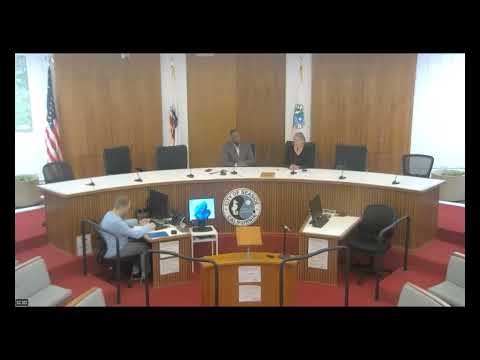
The board scheduled its next regular meeting for Aug. 11, 2026, at 9:30 a.m. in City Hall Council Chambers.