Get Full Government Meeting Transcripts, Videos, & Alerts Forever!
Get email alerts on the School Finance topic
No spam. Unsubscribe anytime.
BCSC finance official says property tax caps have already cut operations revenue and will prompt budget reductions
Summary
Brett Bozeman, assistant superintendent for finance and operations at Bartholomew Con School Corp, explains that local property tax limits known as the 'circuit breaker' cost the district more than $2 million in 2025 and warns a recent state law could nearly double that impact in 2026, leading to planned budget cuts.
Brett Bozeman, assistant superintendent for finance and operations at Bartholomew Con School Corp, said in a district video that the school district's operations fund depends heavily on local property taxes and has already suffered sizable shortfalls.
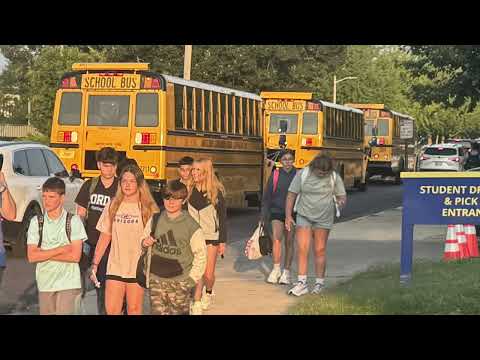
"The operations fund relies on local property taxes," Bozeman said, explaining that a portion of a homeowner's property tax bill "quite literally goes to keep the lights on in our classroom and our buses on the road." He said the operations fund covers maintenance, transportation, utilities and most non-teacher personnel, while teacher salaries and direct instructional costs are paid from a separate education fund.
Bozeman summarized how the district's ability to raise operations revenue is constrained by state rules. He described the 2008 property tax reforms commonly called the "circuit breaker," which cap tax bills (homeowners are capped at 1% of assessed value) and can create "circuit breaker credit loss" when collections fall short of what was levied. "In 2025, BCSC lost over $2,000,000 in expected revenue due to the circuit breaker," Bozeman said.
He also noted that Indiana law limits how quickly school corporations can increase their levies from year to year through the "maximum levy growth quotient," a calculation based on statewide economic indicators that restricts annual levy increases even when local costs rise faster than inflation.
Taken together, Bozeman said, the circuit breaker and levy growth restrictions have created a persistent gap between what local property taxes generate and what it costs to operate schools. He warned that changes enacted by the state legislature in 2025'specifically Senate Enrolled Act 1'are expected to "nearly double the circuit breaker impact on BCSC in 2026," and that the district is reducing its budget over the next several years in anticipation of that effect.
Bozeman framed the adjustments as a response to larger fiscal pressures: rising utility and materials costs combined with limits on revenue growth. "It's always BCSC's goal to be fiscally responsible and financially transparent in how we set our tax levy with regards to the impact the levy has on our community," he said.
For community members seeking more detail, Bozeman directed viewers to a recording of the operations fund budget workshop held at the school board meeting on 05/18/2026 available on the BCSC YouTube page.