Get Full Government Meeting Transcripts, Videos, & Alerts Forever!
Get email alerts on the Site Plan 289 E Main topic
No spam. Unsubscribe anytime.
Planning commission denies proposed 289 East Main site plan over parking and code compliance
Summary
The Planning Commission voted to deny the site plan for 289 East Main Street after staff cited the city attorney's opinion that first-floor private residential parking is not permitted under the current zoning; members also raised unresolved issues on lighting and drainage.
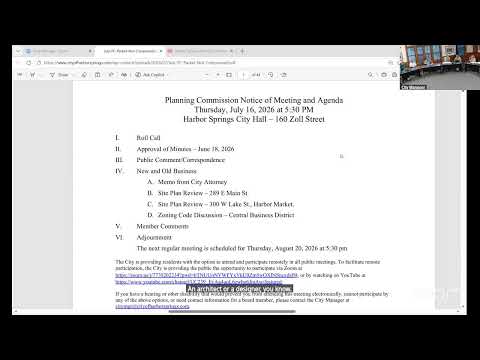
The Harbor Springs Planning Commission on July 16 voted to deny the site plan for 289 East Main Street, citing noncompliance with the city's zoning code and outstanding concerns, chiefly the proposal to locate private residential parking on the building's ground floor.
The commission's discussion followed a July 10 legal memorandum summarized by staff that concluded a 90‑day moratorium on accepting new site plans for buildings over 30 feet and two stories does not automatically stop the review of an application already in the queue, but that the specific plan element placing residential parking on the first floor "would not be permitted" under the existing ordinance. Commissioners repeatedly identified parking, drainage and lighting as the main reasons the project remained problematic.
During the deliberation, commissioners debated whether to treat the item as denied or tabled so the applicant could resubmit under the moratorium rules. Ultimately a motion to deny the application was made, seconded and carried in a roll‑call vote; the chair announced that the motion passed. The transcript records that commissioners expressed concern that denial could require the applicant to resubmit after the moratorium period and that resubmission would be subject to any code changes adopted before then.
Commission discussion also noted community input: one commissioner told the panel they had received a video from members of the United Methodist Church documenting shadowing concerns for the neighborhood and suggested the commission keep that feedback in mind.
The denial is procedural and technical: the commission did not adopt site modifications or mandate mitigation measures as part of the decision. Staff advised that if the applicant wants to pursue the project again, they must resubmit a revised site plan that complies with the moratorium and any code provisions in place at the time of resubmittal.
The commission did not reference a specific remedy timeline for the applicant beyond resubmittal; the moratorium could affect when a resubmitted plan is accepted for review.