Get Full Government Meeting Transcripts, Videos, & Alerts Forever!
Get email alerts on the Personnel Policy topic
No spam. Unsubscribe anytime.
Teachers urge Morton Board to reject broad directives policing off‑duty conduct
Summary
Union leaders and a string of teachers told the Morton CUSD 709 board that directives responding to an off‑duty private text message risk an overly broad precedent for disciplining private conduct; they asked the board to review the directives and consider closed session.
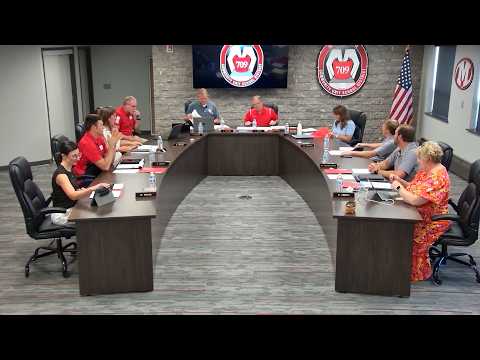
Board President Mister Rudd opened the meeting and heard a public comment block focused on personnel directives the district issued after a private off‑duty exchange.
Benjamin Ginzel, president of the Morton Education Association, told the board that while members do not defend the underlying judgment, their central concern is the district’s response and the precedent it would establish if private, off‑duty conduct becomes subject to district discipline. “Where does school district authority over an employee end, and where does that employee’s private life begin?” Ginzel asked, urging the board to examine the directives’ language, scope and precedent and to discuss the matter in closed session.
Several educators followed with testimony. Brian Deers, a Morton High School social‑studies teacher, said the proposed language relies on broad, subjective terms such as “professional appropriate relationships at all times” and warned that such wording invites inconsistent enforcement and legal challenges. “The issue before you tonight isn’t whether teachers should be held to high standards… The issue is whether this policy establishes standards that are so broad and subjective that they invite inconsistent enforcement,” Deers said.
Other speakers—including Megan Hassler (Wharton Junior High), Patty Massalia (junior high SEL teacher and special ed department head), Louie Harper (high‑school social worker), Caitlin Geschwind (resource special‑education teacher) and longtime teacher Bob Hornsby—told the board the contested text message was sent during summer on personal devices, did not involve students or district resources, and that applying discipline based on private speech would harm recruitment and morale. “If private conversations that have no connection to our schools or our students can be used as grounds for professional discipline, what precedent does that set?” Massalia asked.
The board did not take formal action at the meeting on the personnel item. Superintendent Dr. Sander thanked speakers, acknowledged the district’s interest in maintaining professional standards, and said administration would continue dialogue with staff. Several board members said the matter raised important legal and operational questions and asked administration to place deeper analysis on a future agenda; one board member suggested discussing the directives in closed session.
The meeting proceeded to administrative reports and other agenda items; the board later voted to enter closed session for personnel, litigation and property.
What’s next: Board members asked administration to provide the directives and additional analysis; members signaled they would consider the recommendation to review the matter in closed session before taking any personnel action.