Get Full Government Meeting Transcripts, Videos, & Alerts Forever!
Get email alerts on the Infrastructure topic
No spam. Unsubscribe anytime.
Planning board flags sewer-capacity and zoning clarity concerns as development grows
Summary
Board members reviewed sewer-plant capacity data and discussed the need to plan if approvals and ongoing projects push usage toward DES notification thresholds; members also criticized the master plan and zoning ordinances as unclear and asked staff to prepare targeted revisions.
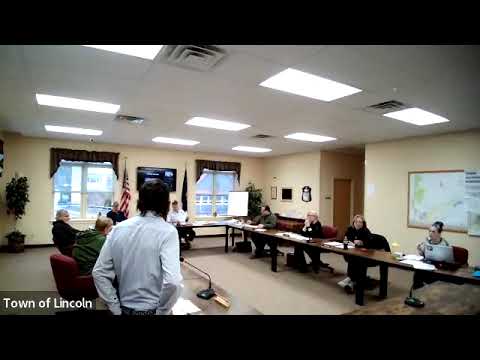
The Lincoln Planning Board spent substantial time reviewing wastewater capacity and the town’s land-use regulations, with members warning that approved and proposed developments could push the sewer plant toward a threshold that triggers state involvement and urging a rewrite of confusing ordinance language and website materials.
Committee member (Speaker 2) briefed the board on sewer-plant metrics, saying the plant is handling roughly 43–47 percent of capacity in current-day measures and that the cumulative effects of approved projects (including South Peak and other large developments) mean the town could approach the 80 percent level at which the Department of Environmental Services (DES) must be notified and contingency planning considered. Speaker 2 said that when the town hits the 80 percent threshold DES will expect a plan for handling additional flows.
Board members also called for clearer, more usable regulations and a more searchable website. Chair (Speaker 1) presented a detailed review of the draft land-use and site-plan regulations and the online application materials, saying the documents contain inconsistent definitions, multiple places that appear to conflict, and layout that makes it hard for homeowners and applicants to determine what applies.
Speakers urged staff to produce a prioritized list of ordinance fixes and to prepare clearer applicability language and consolidated definitions. The discussion touched on how phased developments must comply with rules in effect at each phase and on whether multi-phase approvals create long-term obligations for applicants.
Procedural note: the transcript records Committee member (Speaker 2) making a motion to adjourn near the meeting’s close; a formal second and roll-call vote are not recorded in the provided excerpt. No ordinance or zoning changes were adopted during the session.