Get Full Government Meeting Transcripts, Videos, & Alerts Forever!
Get email alerts on the Code Enforcement topic
No spam. Unsubscribe anytime.
Vernon weighs interlocal agreements and enforcement after pole‑barn, food‑truck dispute
Summary
At a April 6 Vernon workshop, council members and staff discussed gaps between Washington County land‑use decisions and local code enforcement after a neighbor challenged a land‑use change tied to a newly built pole barn and food‑truck plans; staff warned nuisance abatement costs are high without an interlocal.
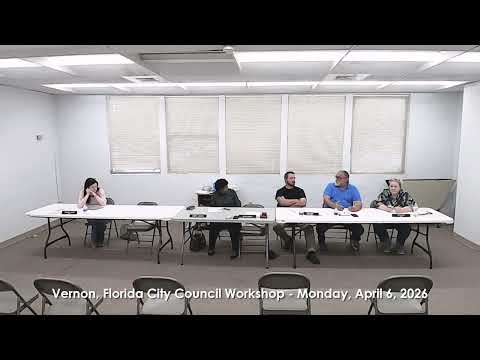
Chair (S1) opened a workshop on April 6 and the council spent much of the meeting considering how to handle land‑use and code‑enforcement problems created when Washington County issues development decisions that affect properties inside Vernon.
Staff member (S2) told the council that county representatives visited recently to discuss outreach and economic development, and that the county has not yet provided an interlocal agreement for the fire department. "They just wanted to talk about what the EDC could do to help Vernon," Staff member (S2) said. The council agreed to table a separate agenda item until a full panel is available.
The discussion turned to a neighbor's challenge to a county land‑use change after a property owner built a pole barn and signaled a plan to operate food trucks. Staff member (S3) explained how county review works: "Washington County's planners will put together a packet and send to the council, rest review, and get feedback," S3 said, and added that the county issues development orders and land‑use changes while the county's code governs initial review.
That division of authority is creating enforcement gaps in Vernon. Staff member (S3) told the council that if a county issues a development order and construction proceeds, some enforcement can become a city code issue handled through nuisance abatement, but pursuing those cases is costly: Staff member (S2) said the city has spent "probably over $20,000" on a recent nuisance‑abatement case that was not in the budget. S3 warned the city lacks an automatic appeals mechanism for county land‑use decisions and said the county attorney had forwarded the neighbor's filing to city staff after the change was made.
Residents questioned whether the pole barn, if used to host food trucks and seating, would require restrooms, handicapped parking and other commercial infrastructure. Resident (S4) asked whether the site was correctly designated commercial, and staff confirmed the county records were ambiguous and the case before the county was a land‑use change rather than a completed development order or site plan.
Council members and staff discussed two practical paths: ask Washington County to provide clear interlocal agreements that spell out enforcement responsibilities or invest locally in code‑enforcement capacity, which could include hiring enforcement staff or establishing a nuisance board that would require separate legal counsel. Staff member (S3) noted legal and process limits: "You actually have to hire a 2nd law firm to do that because ... the attorney for the judge can't also be the prosecutors. It's required by statute," S3 said.
The council did not adopt any formal action on the land‑use challenge during the recorded workshop. Members asked staff to pursue clarification with the county and to bring interlocal options back for discussion at a future meeting.
The workshop later included a motion to adjourn that was read aloud; the transcript does not record a vote on that motion.