Get Full Government Meeting Transcripts, Videos, & Alerts Forever!
Get email alerts on the Oversight topic
No spam. Unsubscribe anytime.
State auditor presents ombudsman report highlighting data breach, foster care gaps and high benefit error rates
Summary
Kentucky State Auditor Lisonbee Ball reported on the ombudsman's office after its transfer from CHFS, noting ~20,617 complaints in 2025, ~150 corrective action plans, a data breach affecting about 2,465 individuals, ongoing kinship care litigation, 81 children placed in nontraditional settings Jan–Jun 2026, and elevated error rates in SNAP and Medicaid programs.
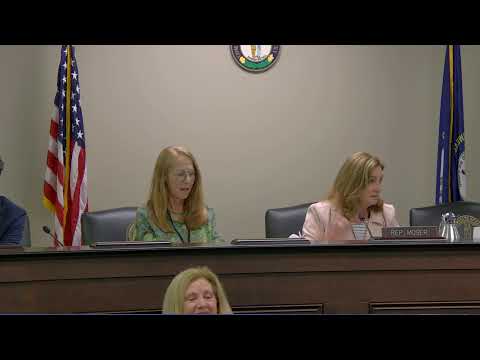
Kentucky State Auditor Lisonbee Ball briefed the interim joint committee on health services on work since the ombudsman's office moved into the auditor’s office, citing significant complaint volumes, systemic problems and several ongoing reviews.
Ball said the office received roughly 20,617 complaints in 2025 and issued about 150 corrective action plans, and described a prominent data‑breach matter that affected about 2,465 individuals. "We remain vigilant to make sure anybody who had this happen to them, that they know it," Ball said. She also described ongoing work on the kinship care dispute now before the Court of Appeals and noted a cursory review found 81 children in nontraditional placements between Jan. 1 and June 30, 2026.
The auditor flagged high administrative error rates across benefit programs: a year‑to‑date complete error rate for SNAP of 84.6% (the 2025 full‑year figure was 89.25% for all error types), and a 43.10% year‑to‑date error rate in Medicaid long‑term care eligibility reviews — which Ball estimated translates to $148 million–$173 million in potential impact for that program if not corrected. She also noted a federal threshold for certain error rates (6%) and said the office is actively working with the cabinet and field staff to address issues before federal penalties arise.
Ball described steps the office has taken to improve oversight — restoring access to key databases (iTwist), reestablishing independent structured case reviews, producing public reports and recommending policy changes — and urged continued collaboration with the Cabinet for Health and Family Services to reduce variability in case handling.
Committee members asked for examples and implementation details; Ball offered to provide case‑level examples and to pursue more granular reporting to help target fixes.
Provenance: This article is based on the auditor/ombudsman update beginning with the auditor’s introduction of the report and continuing through Q&A with committee members.