Get Full Government Meeting Transcripts, Videos, & Alerts Forever!
Get email alerts on the School Finance topic
No spam. Unsubscribe anytime.
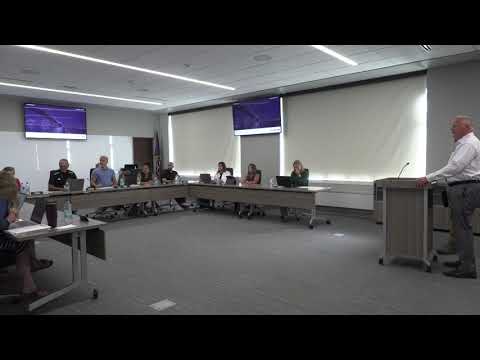
Rockford board approves combined non‑homestead millage question for November ballot
Summary
After a presentation from Seaford PR about state funding mechanics, the Rockford school board voted to place a combined non‑homestead millage renewal and 'hedge' on the November ballot to protect the district's ability to levy the full 18 mills and avoid an estimated $9.5 million shortfall. Some board members and public speakers raised concerns about bundling questions.
The Rockford Public Schools board voted to place a combined non‑homestead operating millage question on the November ballot after a presentation that framed the measure as necessary to protect the district's per‑pupil foundation allowance.
John Umholt of Seaford PR told the board the non‑homestead millage applies to non‑owner occupied commercial, rental and second‑home properties and "is not a tax on homeowners." He explained the proposal combines a renewal with a hedging provision so the district can maintain the full 18 mills it is expected to levy to receive the full state foundation allowance. "It's about a dollar of tax for every $1,000 of taxable value," he said, explaining the 18‑mill levy equates to roughly $18 for every $1,000 of taxable value for non‑homestead properties.
Seaford's presentation stressed communication and education as part of the campaign strategy, noting that prior ballot questions had been asked as two separate questions and that combining them was intended to reduce confusion and the risk that one question's different vote outcomes would result in the district losing necessary revenue. The presenter said opponents often frame millage proposals in ways that cause voter confusion, and recommended a single, focused informational campaign.
Several board members and members of the public raised concerns about bundling a renewal and a hedging component in a single question. Emily Wailer and others urged the board to consider separating items to avoid the risk that one element with fewer supporters could drag down the whole proposal. Board members discussed those tradeoffs during a question‑and‑answer period.
After discussion the board moved to approve the ballot resolution as presented; a roll call was held and board members present voted to approve placing the combined question on the ballot. The resolution and official ballot language are included in the board packet (as the presenters noted).
Why it matters: Non‑homestead millages fund operating dollars that support staffing and classroom operations. Seaford PR highlighted the state funding formula's expectation that districts levy the full 18 mills and described a potential budget impact if the district were unable to levy that amount.
What was decided: The board approved placing the combined non‑homestead millage question on the November ballot, with administration and Seaford PR recommending an educational engagement campaign in advance of the vote.
What remains unresolved: Board members and public speakers expressed differing views on whether bundling the renewal and hedge into a single question is the best long‑term strategy. The board approved the resolution as presented; specifics of the outreach and messaging campaign will be developed by the district and its communications vendor.