Get Full Government Meeting Transcripts, Videos, & Alerts Forever!
Get email alerts on the Traffic Drainage topic
No spam. Unsubscribe anytime.
Residents press Vernon council to lower Church Street speed limit and to repair drainage; engineer to review
Summary
A Vernon resident asked the council to lower the speed limit on Church Street citing safety and property damage; council members and staff said a traffic study by DOT or county is required. Separately, a resident requested a single pipe and fill to fix a ditch near tennis courts; council agreed the city engineer should inspect and recommend either a quick fix or an engineered head wall.
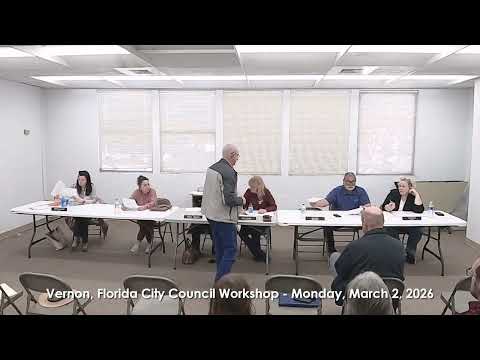
A resident’s request to lower the speed limit on Church Street and separate concerns about a nearby drainage hole were the primary community-safety items discussed during the Vernon City Council meeting Monday.
Staff (speaker 2) introduced a constituent concern, saying, “Mister Pippen reached out about the speed limit on Church Street,” and described that the street has portions with posted 35 mph signs while adjacent residential segments read 15–25 mph. Council members and staff emphasized that changing posted speeds typically requires a formal traffic study. Legal/administrative staff (speaker 5) summarized the rule for local speed controls: “With respect to a residential district, the county or municipality may set a maximum speed limit of 28 or 25 miles per hour on local streets and highways after an investigation determines that such a limit is reasonable.” The council directed staff to contact DOT and county authorities about a study so any change would be supported by official data.
Why it matters: Lowering speed limits without an accepted engineering study can create enforcement and liability issues. Council members repeatedly pointed out that a traffic study helps set defensible limits and determines whether physical calming measures (for example, speed bumps) are appropriate.
Drainage request and engineering concerns: Resident speaker 4 requested a modest, low-cost repair to cover an 80%-sized hole in a ditch near the tennis courts by buying “one piece of pipe and dirt” (initial price checked at Tractor Supply was $299 for a 20-foot, 16-inch pipe before measurement). Council members discussed whether a targeted short-term repair or a permanent, engineered head wall would be more appropriate. City staff and the legal advisor cautioned that a quick fix could redirect runoff or cause unintended consequences. The council instructed the city engineer (speaker 10 and the public-works/engineering team) to inspect the location and return with recommendations; members said they preferred a properly engineered solution if funding and logistics permit.
What’s next: Staff will reach out to DOT/county for guidance or to initiate a traffic study for Church Street. The city engineer will inspect the ditch by the tennis courts and report back at the next meeting with recommended repairs, cost estimates and whether a quick temporary fix is acceptable pending a long-term solution.
Direct quotes from the meeting are used throughout and attribution follows the transcript: staff explained the constituent request; legal/administrative staff summarized statutory limits; an identified resident provided the low-cost pipe estimate; and the engineer/staff were asked to evaluate and return with findings.